

Warm evenings in cities like New York or Los Angeles deserve an outdoor centerpiece that blends sophistication with modern comfort. For affluent homeowners who appreciate style and clean air, gas fire pits deliver elegance and a dramatically cleaner burn than wood alternatives. This guide clears up common myths, compares top designer options, and explains what sets gas fire pits apart, empowering you to craft an inviting, regulation-friendly space for unforgettable social gatherings.
Table of Contents
- Defining Gas Fire Pits And Common Myths
- Types Of Gas Fire Pits And Key Differences
- Essential Features And How Gas Fire Pits Work
- Cost, Safety, And Maintenance Considerations
- Comparing Gas Fire Pits To Wood-Burning Options
Key Takeaways
| Point | Details |
|---|---|
| Gas fire pits offer cleaner burning alternatives. | They emit minimal pollutants compared to wood-burning options, enhancing outdoor air quality. |
| Installation options vary based on fuel type. | Propane models require less infrastructure, while natural gas versions provide a continuous supply. |
| Maintenance is significantly lower with gas fire pits. | They require minimal upkeep compared to wood-burning pits, which involve ash management and frequent cleaning. |
| Safety mechanisms enhance user confidence. | Gas fire pits are equipped with safety features that meet rigorous standards, making them a reliable choice for outdoor gatherings. |
Defining Gas Fire Pits and Common Myths
Gas fire pits represent a significant departure from traditional wood-burning alternatives, offering a refined solution for creating outdoor ambiance without the drawbacks. Unlike their wood-burning counterparts, these sophisticated features contain fire within a controlled structure while burning cleaner fuels like propane or natural gas, making them ideal for discerning homeowners who value both aesthetics and environmental responsibility.
What Makes a Gas Fire Pit Different
A gas fire pit is fundamentally a structure designed to contain fire safely while running on gaseous fuel rather than wood. These features typically feature metal or concrete construction, engineered to channel flames elegantly while preventing fire spread. The distinction matters because fuel choice determines everything from maintenance requirements to air quality impact.
Modern gas fire pits fall into several distinct categories based on their design philosophy and fuel source. Propane-powered models offer portability and independence from utility lines, while natural gas versions provide continuous fuel supply from your home’s existing infrastructure. This structural versatility allows homeowners to select the option that best aligns with their specific property configuration and lifestyle preferences.
Gas fire pits burn substantially cleaner than wood alternatives, producing minimal smoke and particulate matter while delivering the warmth and visual appeal you crave.
Separating Fact from Fiction
Multiple misconceptions surround gas fire pits, largely stemming from assumptions that all outdoor fires perform identically. The reality is far more nuanced. Wood-burning pits emit significant particulate pollution harmful to air quality, while gas-powered models reduce these emissions dramatically.
Here are common myths that deserve clarification:
-
Myth: All fire pits produce equally harmful smoke and pollutants.
-
Reality: Gas fire pits emit substantially less particulate matter and comply better with local air quality regulations.
-
Myth: Gas fire pits lack authentic flame character.
-
Reality: Modern designs produce dancing, realistic flames indistinguishable from wood burning.
-
Myth: Installation requires complicated infrastructure modifications.
-
Reality: Propane models need only a fuel tank; natural gas versions integrate with existing lines.
-
Myth: Gas fire pits are unsafe compared to wood alternatives.
-
Reality: They feature advanced safety mechanisms and meet rigorous certifications like ANSI and CSA Group standards.
Another misconception involves maintenance burden. Gas models require far less upkeep than wood-burning options since they eliminate ash cleanup, chimney concerns, and seasonal debris management. Your outdoor space remains pristine and guest-ready with minimal effort.
Why Luxury Homeowners Choose Gas
Affluent homeowners increasingly recognize that gas fire tables and pits offer superior cleaner burning performance alongside their design sophistication. The combination of clean operation, minimal emissions, and elegant aesthetics aligns perfectly with contemporary outdoor living aspirations.
These features integrate seamlessly into curated landscape designs where every element serves both functional and aesthetic purposes. Whether your aesthetic leans toward understated minimalism or bold architectural statements, gas fire pits adapt to your vision while maintaining their core performance advantages.
Pro tip: When evaluating gas fire pit options, prioritize certified models meeting CSA or ANSI standards, ensuring your investment delivers both safety compliance and long-term reliability for countless gatherings with family and friends.
Types of Gas Fire Pits and Key Differences
Gas fire pits come in remarkably varied designs, each engineered to suit different spatial configurations, aesthetic preferences, and lifestyle requirements. Understanding these distinct types helps you select the perfect centerpiece for your outdoor living vision, whether you prioritize portability, permanent installation, or specific visual statements that complement your landscape design.
Primary Styles and Configurations
The most common gas fire pit designs include fire bowls, fire rings, and fire tables, each offering unique advantages for luxury outdoor spaces. Fire bowls deliver sculptural elegance, often resembling decorative vessels that happen to produce flames. Fire rings provide traditional circular gathering spaces with lower profiles, while fire tables combine functionality with sophisticated surfaces suitable for appetizers and beverages during social gatherings.
Portable models offer flexibility for those who enjoy rearranging outdoor layouts seasonally or entertaining in multiple areas. Built-in versions, conversely, anchor your design scheme and often integrate seamlessly with patio architecture. The choice between them fundamentally shapes your outdoor entertaining experience and long-term landscape evolution.
Below is a summary table highlighting distinct types of gas fire pit configurations:
| Style | Key Features | Best For |
|---|---|---|
| Fire Bowls | Sculptural, open flames | Visual centerpiece |
| Fire Tables | Usable surface, integrated | Entertaining, dining |
| Fire Rings | Low profile, classic design | Group gatherings |
| Portable | Lightweight, movable | Seasonal rearrangement |
| Built-In | Custom, permanent structures | Integrated landscaping |
Your gas fire pit type determines not just its visual presence, but also fuel requirements, installation complexity, and how it functions within your entertaining vision.
Fuel Source Distinctions
The two primary fuel options create fundamentally different ownership experiences. Natural gas fire pits connect directly to your home’s existing utility line, providing endless fuel supply without refilling obligations. Propane models rely on refillable tanks, offering independence from gas line proximity and greater portability for creative placement options.
When comparing fuel choices, consider these practical factors:
- Natural gas requires professional installation but eliminates refueling concerns
- Propane provides flexibility for placement away from existing utility infrastructure
- Natural gas connections ensure consistent, uninterrupted operation
- Propane tanks need periodic replacement, typically costing $15-30 per refill
- Tank storage requires dedicated space within your outdoor design
Propane versus natural gas fire tables present different long-term value propositions depending on your property’s gas infrastructure and entertainment frequency.
Material and Construction Differences
Gas fire pits showcase remarkable variety in material composition, from sleek metal frameworks to stone and concrete structures. Metal construction offers contemporary aesthetics and lighter weight for certain portable designs. Stone and concrete versions provide substantial, permanent installations that anchor outdoor spaces with architectural gravitas.
Material selection impacts:
- Heat retention and flame quality
- Long-term weather resistance and aging patterns
- Maintenance requirements and cleaning ease
- Visual compatibility with existing landscape materials
- Overall durability across seasons
Luxury homeowners often select materials matching existing hardscape elements, creating cohesive outdoor environments where fire features enhance rather than interrupt design narratives.
Size and Heating Output Variations
Gas fire pits range from intimate 24-inch tabletop models to expansive 48-inch statement pieces, with heating output varying significantly across designs. Larger models generate more warmth and accommodate bigger gathering groups, while smaller versions suit compact patios or intimate entertaining.
Consider your space’s dimensions when selecting size. A fire pit should occupy roughly 25-30% of your patio area, leaving comfortable movement space and furniture arrangement flexibility.
Pro tip: When choosing between portable and built-in models, evaluate your long-term vision for that outdoor space—permanent installations demand greater thoughtfulness about placement, but they create more polished, intentional outdoor living environments that guests immediately perceive as sophisticated.
Essential Features and How Gas Fire Pits Work
Gas fire pits operate through carefully engineered combustion systems that transform fuel into warmth and ambiance with remarkable efficiency and safety. Understanding how these features work demystifies their appeal and helps you appreciate the sophisticated engineering behind what appears to be simple, flickering flames.
The Science Behind the Flames
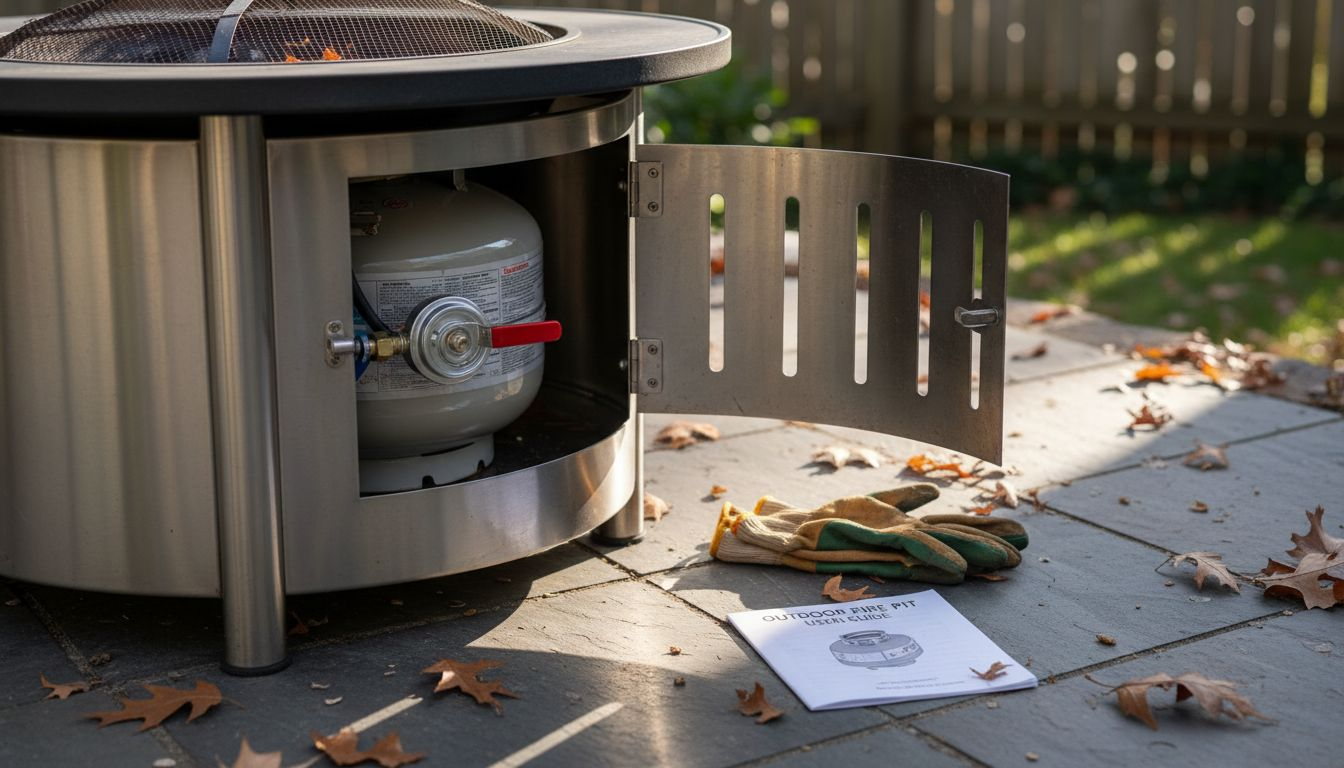
Every gas fire pit depends on four essential elements: fuel, oxygen, heat, and an uninhibited chemical reaction. When natural gas or propane flows to the burner and encounters an ignition source, controlled combustion creates heat and light. Unlike wood fires, this reaction happens with remarkable precision and minimal byproducts.
The process begins when fuel reaches the burner system, where it mixes with oxygen from surrounding air. An ignition spark or pilot flame initiates combustion. The resulting exothermic reaction releases energy as heat and light while producing primarily carbon dioxide and water vapor rather than ash and particulates.
This chemistry explains why gas fire pits burn so cleanly compared to wood alternatives, making them ideal for environmentally conscious homeowners who refuse to compromise on performance.
Gas fire pits produce primarily carbon dioxide and water vapor, making them dramatically cleaner than wood-burning alternatives that release significant particulate pollution.
Critical Operating Components
Several essential components work in harmony to deliver consistent, safe performance. Burners distribute fuel gas evenly across the combustion chamber, ensuring uniform flame distribution and efficient heat output. Ignition systems use either electronic spark ignition or traditional pilot lights to initiate combustion reliably.
Key features that define quality gas fire pits include:
- Electronic or manual ignition for reliable flame starting
- Flame control valves regulating gas flow and heat intensity
- Safety shut-off mechanisms preventing gas leaks
- Proper ventilation pathways ensuring efficient combustion
- Burner design optimizing heat distribution
Safety shut-off valves automatically halt gas flow if flame extinguishes unexpectedly, protecting against dangerous gas accumulation. Flame control systems let you adjust ambiance and warmth precisely, from intimate glowing flames to robust heat production for cool evenings.
How Fuel Systems Function
Your choice between natural gas and propane determines fuel delivery mechanics. Natural gas arrives through underground utility lines connected to your home’s existing infrastructure, requiring no refilling or maintenance. Propane systems use refillable tanks positioned nearby, offering flexibility for placement anywhere in your outdoor space.
Both fuel types flow through regulators that maintain consistent pressure, then pass through control valves where you manage intensity. Electronic ignition systems create reliable spark ignition, while pilot light systems maintain a small continuous flame for instant fire starting.
The result is effortless, on-demand warmth and ambiance controlled at your fingertips through simple valve adjustment or electronic controls, depending on your specific model’s design sophistication.
Pro tip: Before your first use, familiarize yourself with your gas fire pit’s specific ignition sequence and control valve positions—most modern models feature intuitive designs, but understanding your equipment’s particular mechanics ensures confident, safe operation for every gathering.
Cost, Safety, and Maintenance Considerations
Investing in a gas fire pit requires thoughtful evaluation of upfront expenses, ongoing operational costs, safety protocols, and maintenance demands. Understanding these practical realities helps you make informed decisions that align with your budget and lifestyle expectations for long-term outdoor enjoyment.
Initial Investment and Installation Costs
Gas fire pit pricing varies considerably based on design, materials, and fuel type. Propane models typically cost less to install since they require only tank placement and basic connection setup, ranging from $500 to $3,000 for quality units. Natural gas installations demand professional line connection, potentially adding $1,500 to $5,000 in labor and materials depending on distance from your home’s existing gas infrastructure.
Luxury designer models featuring premium materials and advanced features command higher prices, but deliver superior aesthetics and performance that transform outdoor spaces into refined entertaining venues.
Built-in installations represent significant investments compared to portable options, but their permanent integration with your landscape architecture creates polished, intentional outdoor designs that discerning homeowners appreciate.
Fuel Costs and Long-Term Operations
Operational expenses depend primarily on usage frequency and local fuel pricing. Propane refills typically cost $15 to $30 per tank, with consumption varying based on burner size and flame intensity. Natural gas connections offer predictable utility billing integrated into your existing home service, with costs generally lower than propane over extended heating seasons.
Consider these fuel factors:
- Propane requires periodic tank replacement and storage space
- Natural gas eliminates refueling concerns but ties usage to utility costs
- Electronic ignition systems use minimal electricity
- Flame control features optimize fuel efficiency
- Seasonal usage patterns affect annual operational expenses
Most homeowners find gas fire pit operating costs remarkably modest compared to wood burning, which requires constant fuel purchasing and produces ongoing cleanup expenses.
Safety Requirements and Placement Guidelines
Fire pit safety requires careful attention to placement distance and clearance rules. Position your gas fire pit at least 10 to 25 feet away from structures, trees, and combustibles depending on local ordinances. Non-combustible surfaces beneath and surrounding the feature prevent ground fires and protect hardscaping.
Essential safety protocols include:
- Verify local fire codes and obtain required permits
- Maintain clearances from overhead branches and structures
- Install spark screens on open flame models
- Never use indoors or in enclosed spaces
- Keep fire extinguishers accessible during operation
- Inspect gas connections regularly for leaks
Gas fire pits pose significantly lower wildfire risk than wood alternatives, making them increasingly preferred in fire-conscious communities and stricter regulatory environments.
Maintenance Simplicity and Inspections
Maintenance demands remain remarkably minimal compared to wood-burning alternatives. Regular inspections of gas lines, burners, and connections ensure safe operation and prevent leaks. Annual professional servicing identifies potential issues before they develop into safety concerns.
Basic maintenance tasks include:
- Cleaning burner ports quarterly to prevent clogging
- Checking gas connections for tightness and leaks
- Inspecting hoses and regulators for damage
- Clearing debris from combustion chambers
- Testing ignition systems seasonally
Unlike wood pits requiring constant ash removal and chimney cleaning, gas models demand minimal ongoing care while delivering superior performance and reliability across countless seasons.
Gas fire pits require substantially less maintenance than wood alternatives, keeping your outdoor space pristine and guest-ready with minimal effort and expense.
Pro tip: Schedule annual professional inspections before your entertaining season begins to ensure all components function flawlessly and safely—this small investment prevents costly repairs and guarantees confidence in your gas fire pit’s reliability throughout countless gatherings.
Comparing Gas Fire Pits to Wood-Burning Options
The choice between gas and wood-burning fire pits represents far more than aesthetic preference—it fundamentally shapes your outdoor experience, health impact, and long-term satisfaction. Understanding the practical and environmental differences helps discerning homeowners make decisions aligned with their values and lifestyle aspirations.
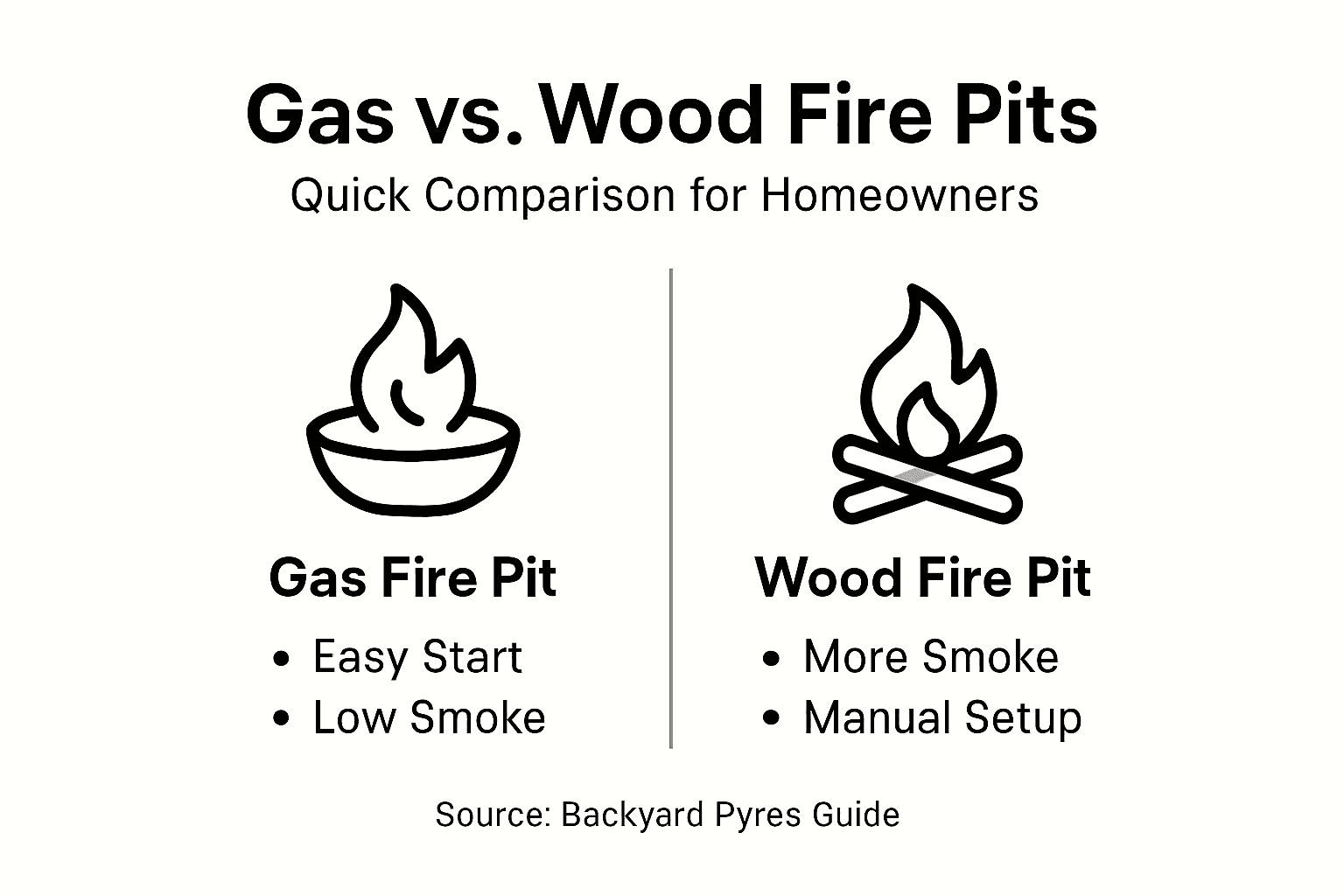
Here’s a quick comparison of key differences between gas and wood-burning fire pits:
| Aspect | Gas Fire Pits | Wood-Burning Fire Pits |
|---|---|---|
| Air Quality Impact | Minimal emissions, cleaner burning | High particulate, smoky emissions |
| Maintenance | Little upkeep, easy cleaning | Frequent ash and soot removal |
| Setup Flexibility | Portable or built-in options | Mostly stationary |
| Control of Flame | Adjustable, instant on/off | Manual control, slow to ignite |
| Health Considerations | Safer for allergies/respiratory | Can worsen respiratory symptoms |
Air Quality and Health Implications
Wood-burning fire pits produce substantial particulate emissions that compromise both outdoor air quality and respiratory health. Wood burning releases smoke with harmful particulates and carcinogens affecting everyone nearby and contributing to broader air pollution concerns. Even EPA-certified wood stoves emit significantly more pollutants than gas alternatives, making the health advantage of gas clear and measurable.
Gas fire pits burn propane or natural gas, producing primarily carbon dioxide and water vapor—the same byproducts created when you breathe. This fundamental difference means your gathering space maintains cleaner air while guests enjoy the ambiance without health compromises.
Healthcare professionals increasingly recognize gas fire pits as superior choices for families with asthma, allergies, or respiratory sensitivity, allowing everyone to participate fully in outdoor entertaining.
Gas combustion produces mainly water vapor and carbon dioxide, while wood burning releases harmful smoke laden with carcinogens and particulates that linger in your breathing space.
Environmental Footprint Comparison
Wood-burning fire pits produce significant particulate emissions harmful to air quality, while gas alternatives deliver dramatically cleaner combustion. Wood burning requires constant fuel purchasing, often harvested from unsustainable sources, creating both environmental burden and ongoing expense. Gas options reduce your outdoor entertainment’s environmental impact substantially.
Key environmental advantages of gas models include:
- Cleaner emissions with minimal pollution
- No deforestation or wood harvesting impact
- Lower carbon footprint than continuous wood purchasing
- Reduced air quality degradation in your community
- Compliance with increasingly strict environmental regulations
Affluent homeowners concerned with environmental stewardship consistently choose gas, aligning their lifestyle choices with sustainability values while enjoying superior performance.
Operational Ease and Convenience
Wood-burning fire pits demand constant attention—gathering fuel, managing ash, cleaning debris, and dealing with unpredictable smoke direction based on wind patterns. Gas models start with simple valve adjustments or electronic ignition, requiring zero fuel preparation and producing zero ash cleanup.
Compare these operational realities:
- Gas: instant ignition, no smoke, complete control
- Wood: fuel gathering, smoke management, extensive cleanup
- Gas: weather-resistant ignition systems
- Wood: difficulty starting in damp conditions
- Gas: adjustable flame intensity for ambiance or warmth
- Wood: limited control over heat output and flames
Your outdoor entertaining time should focus on guests and conversation, not constantly tending fires or managing smoke displacement.
Maintenance Burden and Long-Term Care
Wood-burning options require rigorous maintenance including chimney cleaning, creosote removal, and frequent ash disposal. Gas fire pits demand minimal upkeep—occasional burner port cleaning and annual professional inspections prevent most issues. The time and expense savings accumulate substantially across seasons.
Luxury homeowners value their time highly, making gas’s simplicity particularly appealing for frequent entertaining and stress-free operation throughout gathering seasons.
Pro tip: If you currently use wood-burning fire pits, transition to gas by evaluating fuel availability in your area and consulting with professionals about whether natural gas lines or propane tanks better suit your property’s specific configuration.
Elevate Your Outdoor Space with a Luxury Gas Fire Pit
Choosing the perfect gas fire pit involves balancing aesthetics, performance, and ease of use—all challenges expertly addressed in the discussion about clean-burning fuels, design versatility, and effortless maintenance. For homeowners seeking to transform their patios into sophisticated retreats without the hassle of wood fires gas fire pits offer a compelling solution.
Discover the remarkable blend of modern craftsmanship and functionality by exploring our curated selection of Luxury Fire Tables and Elementi Outdoor Living fire features. These designer pieces bring the visual warmth and superior performance described in the article to life while providing safe and convenient outdoor ambiance.
Experience the difference that premium materials and expert design bring to your outdoor gatherings. Visit Backyard Pyre now to find the gas fire pit that perfectly suits your lifestyle and estate. Upgrade your outdoor living today with a seamless combination of elegance and clean-burning convenience.
Frequently Asked Questions
What are the advantages of gas fire pits over wood-burning fire pits?
Gas fire pits burn cleaner than wood, producing minimal smoke and particulate matter, which benefits air quality. They also require less maintenance, eliminating ash cleanup and soot removal.
How do I decide between natural gas and propane for my gas fire pit?
Natural gas connects directly to your home’s utility line, providing an endless fuel supply, while propane offers more flexibility for placement with refillable tanks. Consider your outdoor space and how often you plan to use the fire pit when making a choice.
What safety features should I look for in a gas fire pit?
Look for advanced safety mechanisms like automatic shut-off valves, flame control systems, and proper ventilation pathways. Ensure your fire pit meets certifications such as ANSI or CSA standards for safety compliance.
How do I maintain my gas fire pit?
Maintenance is minimal; you should clean burner ports quarterly, check gas connections for leaks, and inspect hoses and regulators for damage. Annual professional servicing ensures safe operation and prevents issues.
Recommended
- 7 Types of Fire Pits for Luxurious Outdoor Living Spaces – Backyard Pyre
- Fire Tables Fuel Guide: Propane, Natural Gas, and Wood Pros and Cons – Backyard Pyre
- Fire Tables Fuel Guide: Propane, Natural Gas, and Wood Pros and Cons – Backyard Pyre
- News News News News News News News – Backyard Pyre
- Heating Your Cabin With A Gas Heater - Log Cabin Kits To Buy Online