

Choosing the right centerpiece for your outdoor retreat often comes with unexpected decisions. The distinction between a fire table and a traditional fire pit is more than cosmetic—it shapes how you gather, entertain, and relax in your luxury patio space. A fire table combines warmth, ambiance, and usable furniture in one sophisticated unit, making it ideal for those who value both design and function. This guide unpacks common misconceptions so you select a fire feature that truly matches your upscale lifestyle.
Table of Contents
- Defining Fire Tables And Common Misconceptions
- Differences Between Fire Tables And Fire Pits
- Types Of Fire Tables By Material And Fuel
- Key Features Enhancing Luxury Outdoor Living
- Safety, Costs, And Maintenance Considerations
Key Takeaways
| Point | Details |
|---|---|
| Functionality | Fire tables serve as both a heat source and a usable surface, enhancing outdoor social experiences. |
| Distinction from Fire Pits | Unlike fire pits, fire tables integrate with patio furniture, promoting conversations around a central focal point. |
| Material and Fuel Options | Selecting the right material and fuel type is crucial for durability and performance in various climates. |
| Safety and Maintenance | Proper safety features and regular maintenance are essential for longevity and safe operation of fire tables. |
Defining Fire Tables and Common Misconceptions
A fire table is fundamentally a piece of outdoor furniture that merges two distinct functions into one sophisticated unit. It combines the warmth and ambiance of a fire feature with the practical utility of a dining or gathering table, creating a centerpiece for your patio that serves both form and function.
Understanding what separates a fire table from a traditional fire pit matters more than you might think. While fire pits are standalone heat sources designed primarily for warmth and atmosphere, fire tables feature a flat tabletop surface that allows you to actually use the piece as furniture. This architectural difference transforms how you interact with the feature in your outdoor space.
Many homeowners conflate fire tables with fire pits, but this confusion undermines your ability to choose the right feature for your specific needs. A fire table is purpose-built for social gatherings where comfort and convenience matter equally to aesthetics. You can set drinks and appetizers on the surface, gather closely with family, and enjoy both the warmth and the gathered-around-a-centerpiece experience.
Clarifying the Fire Table Definition
Here’s what makes a fire table distinct from other outdoor fire features:
- Dual functionality: Serves as both a heat source and a usable surface for drinks, decor, or dining
- Substantial base and housing: Provides structural stability and elevated design that works with luxury patio aesthetics
- Central flame design: Creates an inviting focal point while the tabletop remains accessible for practical use
- Design-forward construction: Emphasizes style alongside performance, not just heat output
When you choose a fire table, you’re selecting a piece that prioritizes your social experience as much as warmth generation. This represents a fundamental shift in how you approach outdoor living.
A fire table transforms your patio from a place where you sit near warmth into a space where warmth becomes part of your gathering experience.
Common Misconceptions Debunked
Misconception: Fire tables are merely decorative pieces with minimal heat output.
Reality: Quality fire tables generate substantial warmth while maintaining stunning visual presence. The tabletop surface does not compromise the flame’s ability to provide comfortable BTU output for cool evenings. Different fuel types deliver varying heat levels and ambiance characteristics, so you have flexibility in choosing the performance level that matches your climate and preferences.
Misconception: Fire tables are too small to be practical for entertaining.
Reality: A well-designed fire table serves multiple purposes during gatherings. Guests can set beverages on the surface, the feature anchors conversation around a central point, and the warmth extends comfort into shoulder seasons. The tabletop makes the fire table more versatile than a traditional pit.
Misconception: Fire tables are primarily decorative luxury items without functional value.
Reality: Fire tables are purposeful outdoor furniture that genuinely enhance how you use your patio. You’re not sacrificing function for style; you’re gaining both simultaneously.
Pro tip: When evaluating fire tables, focus on tabletop dimensions and surface material—these practical details determine whether the piece will truly integrate into your entertaining style and withstand your climate.
Differences Between Fire Tables and Fire Pits
While fire tables and fire pits both create outdoor warmth and ambiance, they serve fundamentally different purposes in your patio design. Understanding these distinctions helps you choose the feature that truly aligns with how you entertain and use your outdoor space.
The most obvious difference is structural. A fire pit is a standalone vessel or opening designed to contain flames, typically circular or square in shape. A fire table, by contrast, sits atop a substantial base with a flat tabletop surface surrounding the central flame. This architectural distinction shapes everything from heat output to entertaining functionality.
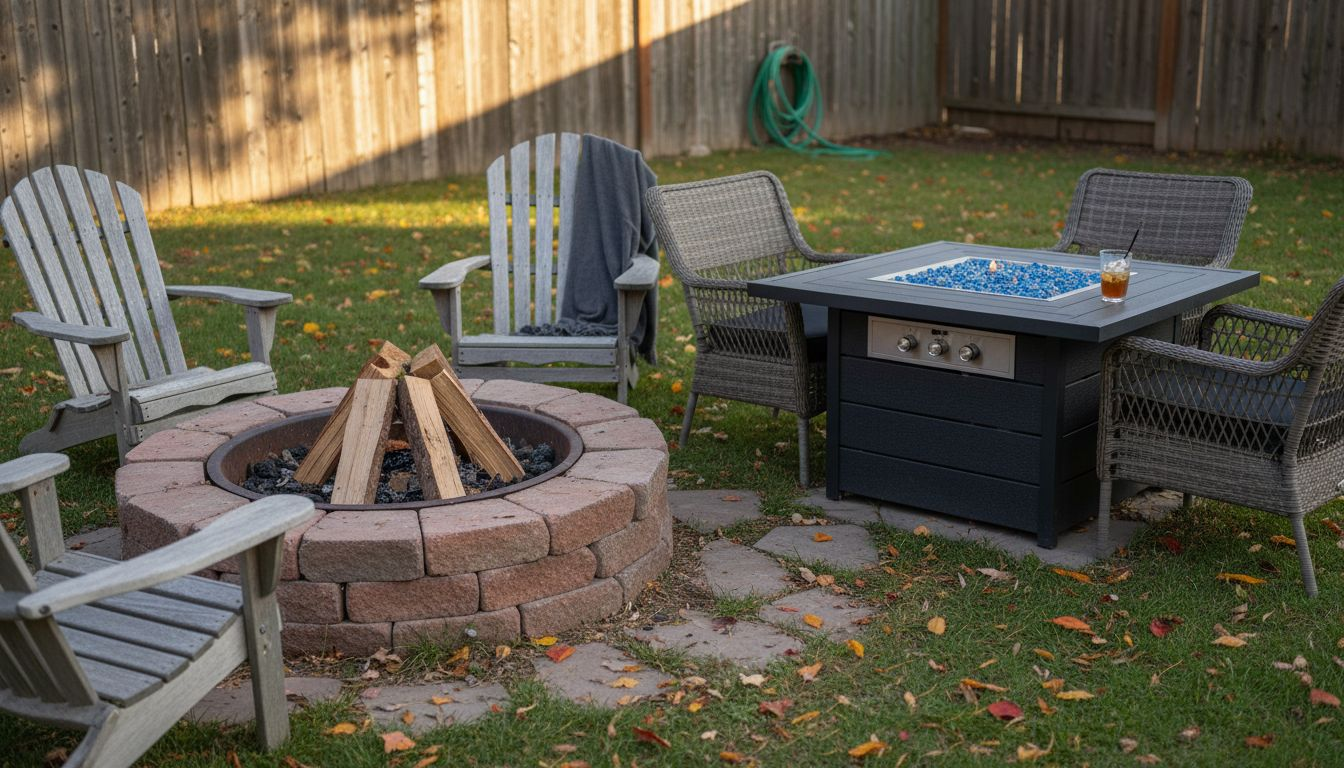
Fire pits focus on providing warmth and open flames, often mimicking traditional campfire experiences. Fire tables integrate the fire source with a practical surface for entertaining, offering controlled flames alongside functionality. One prioritizes heat and atmosphere; the other balances those qualities with usable furniture.
Key Functional Differences
Here’s how fire tables and fire pits differ in practical ways:
Here is a concise comparison of fire tables and fire pits for outdoor living:
| Aspect | Fire Table | Fire Pit |
|---|---|---|
| Main Use | Gathering and entertaining | Casual warmth, open flame |
| Surface Function | Usable tabletop for items | No table surface |
| Placement | Integrated in furniture set | Usually standalone in yard |
| Heat Pattern | Controlled, moderate warmth | Strong, radiant warmth |
| Visual Impact | Blends with luxury design | Acts as dramatic focal point |
- Heat output: Fire pits generally emit more intense heat since nothing obstructs the flames, while fire tables provide warmth with a more controlled burn pattern
- Space requirements: Fire pits need generous clearance around them and work best as standalone features; fire tables fit into furniture arrangements and double as gathering spots
- Surface utility: Fire pits offer no usable surface; fire tables function as actual furniture for beverages, decor, or small plates during entertaining
- Entertaining style: Fire pits suit casual gatherings where people stand or sit separately; fire tables create intimate, conversation-focused gatherings around a central point
- Cooking capability: Fire pits often support grills or cooking equipment; fire tables prioritize entertaining over food preparation
Design and Aesthetic Integration
Fire tables integrate seamlessly into curated outdoor living spaces because they’re designed as furniture first, fire features second. The tabletop becomes part of your patio’s design language, complementing lounge seating, dining areas, and architectural elements.
Fire pits, by comparison, function as sculptural focal points rather than functional furniture pieces. They work beautifully in more casual settings or spacious backyards where the fire pit becomes a destination rather than part of the overall furniture arrangement.
The choice between fire tables and fire pits ultimately reflects your entertaining philosophy: Do you want guests gathering around a functional piece of furniture, or do you prefer a dramatic standalone feature?
Heat and Performance Considerations
Fire pits generate more BTUs per hour because the flames rise unobstructed, making them superior for genuinely cold climates or situations where maximum warmth matters most. Fire tables provide adequate warmth for shoulder seasons and mild winter evenings while maintaining design elegance.
If you’re in a cooler climate or prioritize heat, a fire pit may serve you better. If you value year-round entertaining with moderate warmth and sophisticated design, a fire table wins.
Pro tip: Consider your climate and entertaining patterns first—do you gather outdoors primarily in cool weather seeking maximum heat, or year-round for ambiance and light warmth? This answer determines whether a fire table or fire pit better matches your actual outdoor lifestyle.
Types of Fire Tables by Material and Fuel
Fire tables come in diverse material and fuel combinations, each offering distinct advantages in durability, aesthetics, and functionality. Selecting the right combination transforms your outdoor space while ensuring reliable performance for years of entertaining.
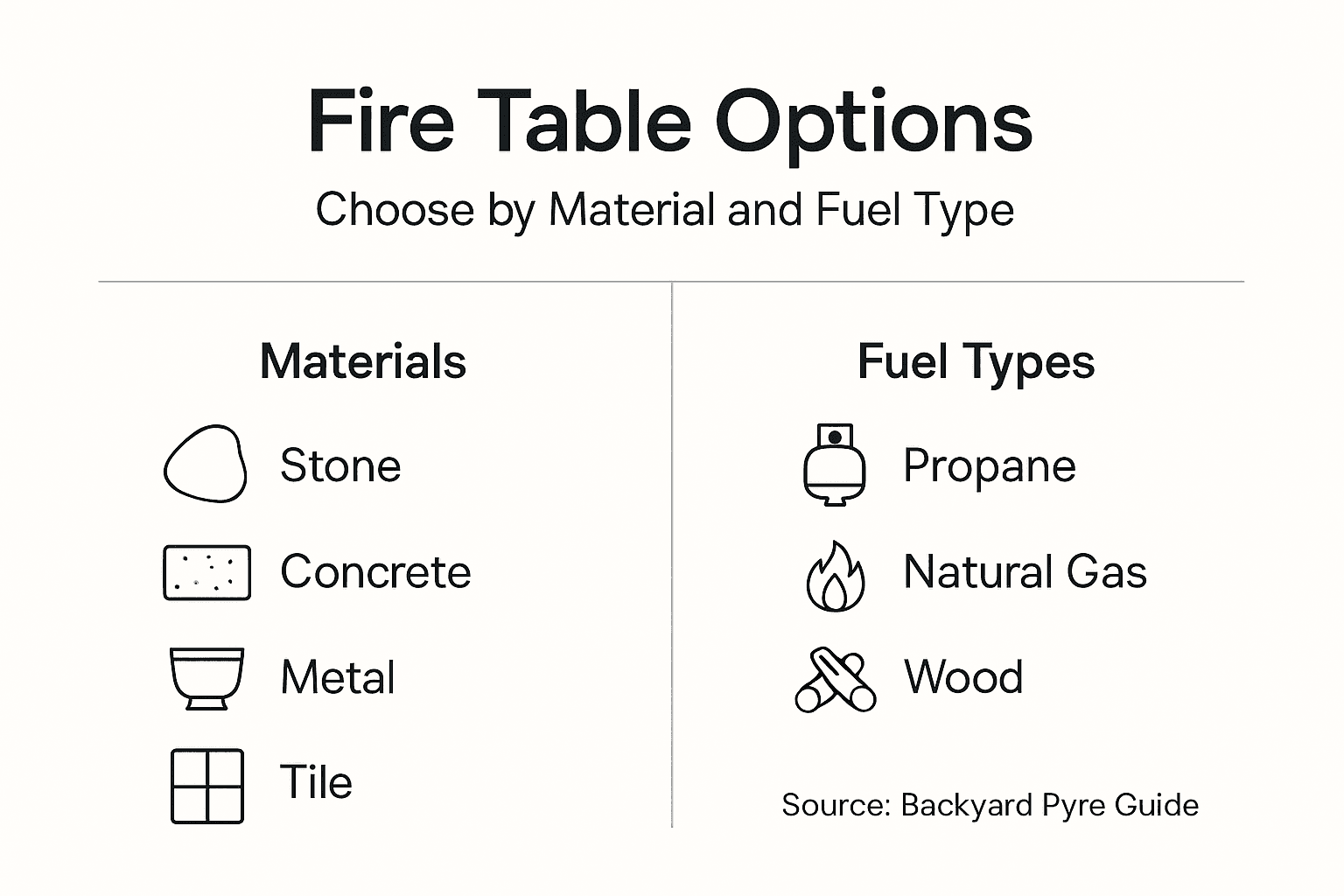
Material choices directly impact how your fire table weathers the elements and complements your patio design. Fuel selection affects installation complexity, operating costs, and the overall experience you create around the feature. The best choice balances your aesthetic preferences with practical performance needs.
Material Options for Fire Tables
Premium fire tables incorporate various materials, each with unique benefits:
- Natural stone: Offers timeless elegance and superior weather resistance; marble, granite, and limestone age beautifully but require periodic sealing
- Stainless steel: Delivers modern aesthetics with excellent durability; resists rust and requires minimal maintenance compared to traditional metals
- Concrete: Provides industrial sophistication and exceptional longevity; can be customized with finishes and patinas that develop character over time
- Metal frames with composite tops: Combines engineered materials for stability with contemporary design; weather-resistant and low-maintenance
- Wood-look materials: Achieves warm aesthetics without wood’s maintenance burden; composite materials resist rotting and warping
Material selection influences not just appearance but also maintenance demands. Natural stone demands occasional sealing, while engineered composites essentially maintain themselves.
Fuel Types and Their Characteristics
Fire tables commonly use propane, natural gas, or wood as fuel sources, with propane and natural gas being preferred for cleanliness and convenience. Each fuel type affects installation, operation, and the ambiance you create.
Propane fire tables offer portability since the fuel tank sits beneath the tabletop. No installation is required beyond unpacking and connecting the tank. Propane burns cleanly with minimal ash and is ideal for renters or those with flexible outdoor plans.
Natural gas fire tables require professional installation connecting to your home’s gas line. Once installed, they operate with the flick of a switch and produce no fuel tanks to replace. Operating costs are typically lower than propane, and the convenience is unmatched for frequent users.
Wood-burning fire tables deliver authentic fire experiences with natural ambiance. They require more maintenance, produce ash, and demand proper ventilation. Wood tables appeal to those seeking traditional campfire atmosphere despite higher upkeep.
Summary of material and fuel options for fire tables at a glance:
| Material or Fuel | Best For | Notable Downside |
|---|---|---|
| Natural Stone | High-end elegance, durability | Requires sealing, heavier |
| Stainless Steel | Modern look, coastal climates | Can show fingerprints |
| Concrete | Custom finishes, long life | Prone to cracks in cold |
| Propane | Easy setup, portability | Ongoing tank refills |
| Natural Gas | Low cost, convenience | Needs pro installation |
| Wood | Traditional ambiance | More cleaning, smoke |
The ideal fire table combines materials and fuel that match your climate, entertaining frequency, and maintenance tolerance rather than purely aesthetic preferences.
Matching Material and Fuel to Your Needs
Consider your specific situation when evaluating combinations. Coastal homeowners benefit from stainless steel’s corrosion resistance. Those in arid climates can embrace natural stone’s durability. Frequent entertainers prefer propane or natural gas’s reliability over wood’s maintenance demands.
Some luxury fire tables offer dual-fuel capabilities, letting you switch between propane and natural gas depending on circumstances. This flexibility maximizes your options without compromise.
Pro tip: Evaluate your typical entertaining season length and frequency first—those who entertain year-round justify propane or natural gas investment, while seasonal users may find wood’s traditional appeal worth the extra maintenance.
Key Features Enhancing Luxury Outdoor Living
A fire table succeeds not in isolation but as part of a carefully curated outdoor living ecosystem. The best fire tables integrate seamlessly with complementary features that transform your patio from a basic outdoor space into a sophisticated retreat.
Luxury outdoor living balances multiple elements working in concert. Your fire table serves as the social centerpiece, but surrounding features elevate the entire experience. Quality materials, thoughtful layout, comfortable seating, and ambient lighting all contribute to an outdoor space that rivals indoor entertaining areas.
Essential Features That Elevate Your Space
Consider these key components when designing around your fire table:
- Comfortable seating arrangements: Lounge chairs, benches, and outdoor sofas positioned to face the flames create natural conversation zones
- Ambient lighting: String lights, pathway lighting, and accent lights extend usability into evening hours while enhancing ambiance
- Weatherproof textiles: High-quality outdoor cushions and throw blankets add comfort and sophistication without sacrificing durability
- Integrated dining surfaces: Adjacent outdoor dining tables or serving stations provide convenient beverage and appetizer access
- Landscape elements: Privacy screens, strategic plantings, and hardscaping define your gathering space and create visual boundaries
- Weather protection: Pergolas, umbrellas, or retractable shade structures extend your entertaining season
Each element should reflect your personal aesthetic while serving practical purposes. A luxury outdoor space feels intentional, not cluttered.
Design Cohesion and Material Consistency
Materials tie your entire outdoor retreat together visually and functionally. When your fire table features stainless steel or stone, adjacent furnishings should echo those materials. Mismatched materials create visual chaos; coordinated selections feel curated and intentional.
Consider how creating a luxury outdoor retreat requires attention to finishes, colors, and design languages across all elements. Your fire table’s aesthetic should influence seating choices, paving materials, and decorative accessories.
The most luxurious outdoor spaces feel less like furnished backyards and more like outdoor rooms with distinct purpose and sophisticated design intent.
Functionality Meets Aesthetics
True luxury means your outdoor space functions beautifully during actual use, not just in photographs. A fire table with uncomfortable seating nearby fails to deliver. A gorgeous patio without proper lighting disappoints at sunset.
Duals-purpose features maximize sophistication. Storage benches provide seating and organization. Built-in planters offer privacy and greenery. Fire tables themselves serve as both heat sources and functional furniture—the ultimate dual-purpose feature.
Your fire table becomes most valuable when surrounded by features that enhance gathering, conversation, and comfort throughout the seasons. Invest in complementary elements that extend your entertaining timeline and create memorable experiences.
Pro tip: Start by identifying your most-used entertaining season and design backward from there—year-round spring entertaining demands different features and durability standards than occasional summer gatherings.
Safety, Costs, and Maintenance Considerations
Owning a fire table involves real responsibilities beyond aesthetics and entertaining value. Understanding safety requirements, realistic costs, and maintenance demands ensures your investment delivers years of reliable performance and protects your family and guests.
Fire tables are engineered products with specific safety standards and operational requirements. Cutting corners on maintenance or installation creates liability risks and shortens equipment lifespan. Smart ownership means budgeting for proper setup, professional inspections, and ongoing care.
Safety Features and Compliance Standards
Quality fire tables incorporate multiple safety mechanisms protecting users and your property:
- Automatic shut-off systems: Electronic ignition features prevent gas buildup and uncontrolled flame behavior
- Temperature-resistant materials: Tabletop surfaces remain cool enough to touch, preventing accidental burns
- Burner design specifications: Professional-grade burners distribute flames evenly while preventing fuel spillage
- Proper ventilation: Engineered airflow systems prevent carbon monoxide accumulation in covered spaces
- CSA Group or equivalent certification: Third-party testing confirms compliance with safety standards
- Clear operational instructions: Written guidelines specify safe usage parameters and maintenance schedules
Never compromise on safety certifications when evaluating fire tables. Budget brands cutting costs on safety mechanisms create genuine risks.
Understanding Total Cost of Ownership
Proper maintenance planning reduces costly repairs and extends equipment lifespan significantly. Initial purchase price represents only part of your total investment.
Budget for these realistic expenses:
- Installation costs: Professional setup for natural gas models ranges from $500-$2,000 depending on gas line proximity and accessibility
- Annual inspections: Professional burner and ignition system checks cost $150-$300 yearly
- Propane refills: If using propane, tank refills cost $15-$25 depending on regional pricing and usage frequency
- Replacement parts: Ignition systems, burner components, and seals require periodic replacement ($100-$500 depending on component)
- Protective covers: Quality weatherproof covers extend material life by years, costing $200-$600
Quality fire tables from premium manufacturers command higher prices but deliver better value through durability and lower maintenance requirements.
Routine Maintenance Requirements
Regular care prevents safety issues and keeps your fire table operating beautifully. Monthly cleaning removes debris from the burner area. Seasonal inspections catch developing problems before they become serious.
Pro tip: Schedule professional inspections during spring before entertaining season begins—this timing catches winter weather damage early and ensures your fire table operates perfectly when you need it most.
Elevate Your Outdoor Gatherings with Luxury Fire Tables from Backyard Pyre
Understanding the unique appeal of a fire table—its perfect blend of warmth, style, and functionality—can transform how you entertain outdoors. If you want to create intimate social spaces where elegance meets comfort and every surface serves a purpose, exploring premium options is essential. Many homeowners struggle with choosing between traditional fire pits and fire tables, not realizing that a thoughtfully designed fire table can become the true centerpiece of a luxurious outdoor retreat.
Discover how our curated collection at Explore Elementi Plus for Elevated Experiences showcases fire tables that combine superior materials, controlled warmth, and sophisticated design. Whether you seek the ease of propane, the convenience of natural gas, or the timeless ambiance of a wood-burning feature, our selection addresses your needs while enhancing your space. Begin your journey to outdoor luxury today by visiting Backyard Pyre and find the perfect fire table to elevate your gatherings with style and warmth.
Frequently Asked Questions
What is a fire table?
A fire table is a multifunctional outdoor furniture piece that combines a fire feature with a usable tabletop surface, allowing for social gatherings and providing warmth and ambiance.
How does a fire table differ from a fire pit?
Unlike a fire pit, which is primarily designed for warmth and fire, a fire table features a flat surface that allows it to be used as a functional table for placing drinks and food, making it ideal for entertaining.
What types of materials are commonly used for fire tables?
Fire tables can be made from various materials, including natural stone, stainless steel, concrete, and metal frames with composite tops, each offering distinct benefits in durability and aesthetics.
What fuel options are available for fire tables?
Fire tables typically use propane, natural gas, or wood as fuel sources. Propane and natural gas are preferred for convenience and cleanliness, while wood provides a traditional campfire experience.