

What Is a Patio Fire Bowl and Its Outdoor Impact

Luxury gatherings deserve more than just stylish seating. For urban homeowners, the search for designer patio fire bowls goes beyond warmth and ambiance, crafting a signature focal point for outdoor entertaining. Modern fire bowls feature shallow, wide basins and premium materials like stainless steel or concrete, offering both visual impact and safe fire management. This guide uncovers how these architectural elements elevate your exterior—from intimate dinners to lively weekend parties—while blending elegant design principles with functional comfort.
Table of Contents
- Defining Patio Fire Bowls For Modern Patios
- Design Variations And Material Choices Explained
- How Patio Fire Bowls Enhance Outdoor Living
- Safety Guidelines And Legal Requirements Worldwide
- Comparing Fire Bowls To Fire Pits And Tables
Key Takeaways
| Point | Details |
|---|---|
| Sophisticated Design | Patio fire bowls serve as both functional heating sources and elegant design elements, enhancing the aesthetic of outdoor spaces. |
| Fuel Variety | Homeowners can choose between wood, gas, and propane configurations, allowing for tailored outdoor experiences. |
| Material Selection | Different materials, such as stainless steel, copper, and concrete, influence durability, maintenance, and visual appeal. |
| Safety Compliance | Understanding local regulations and safety guidelines is essential for the responsible use of patio fire bowls. |
Defining Patio Fire Bowls for Modern Patios
A patio fire bowl represents a sophisticated outdoor design element that transforms residential exterior spaces into elegant entertainment zones. Engineered for aesthetic and functional purposes, these versatile fixtures provide warmth, ambiance, and a captivating centerpiece for social gatherings.
Fire bowls are characterized by distinct design features that set them apart from traditional fire pits:
- Shallow, wide basin for maximum flame visibility
- Self-contained structure allowing safe fire management
- Constructed from premium materials like stainless steel, carbon steel, or concrete
- Available in multiple fuel configurations (wood or gas)
The architectural significance of a patio fire bowl extends beyond mere functionality. Modern design principles emphasize these elements as sculptural statements that integrate seamlessly with contemporary outdoor living spaces. Their versatile nature allows homeowners to create intimate gathering areas that blur the lines between interior comfort and exterior aesthetic appeal.
Fuel diversity represents another critical aspect of modern patio fire bowls. Homeowners can select from:
- Wood-burning models for traditional, rustic experiences
- Gas-powered units offering precise flame control
- Propane configurations providing convenient, clean-burning options
Pro tip: Consider your specific outdoor space and entertainment needs when selecting a fire bowl, prioritizing both design compatibility and functional performance.
Design Variations and Material Choices Explained
Patio fire bowls represent a sophisticated fusion of design and functionality, with diverse material options defining their aesthetic potential. Material selection plays a critical role in determining a fire bowl’s performance, durability, and visual appeal, transforming outdoor spaces from mundane to extraordinary.
The primary material categories for fire bowls include:
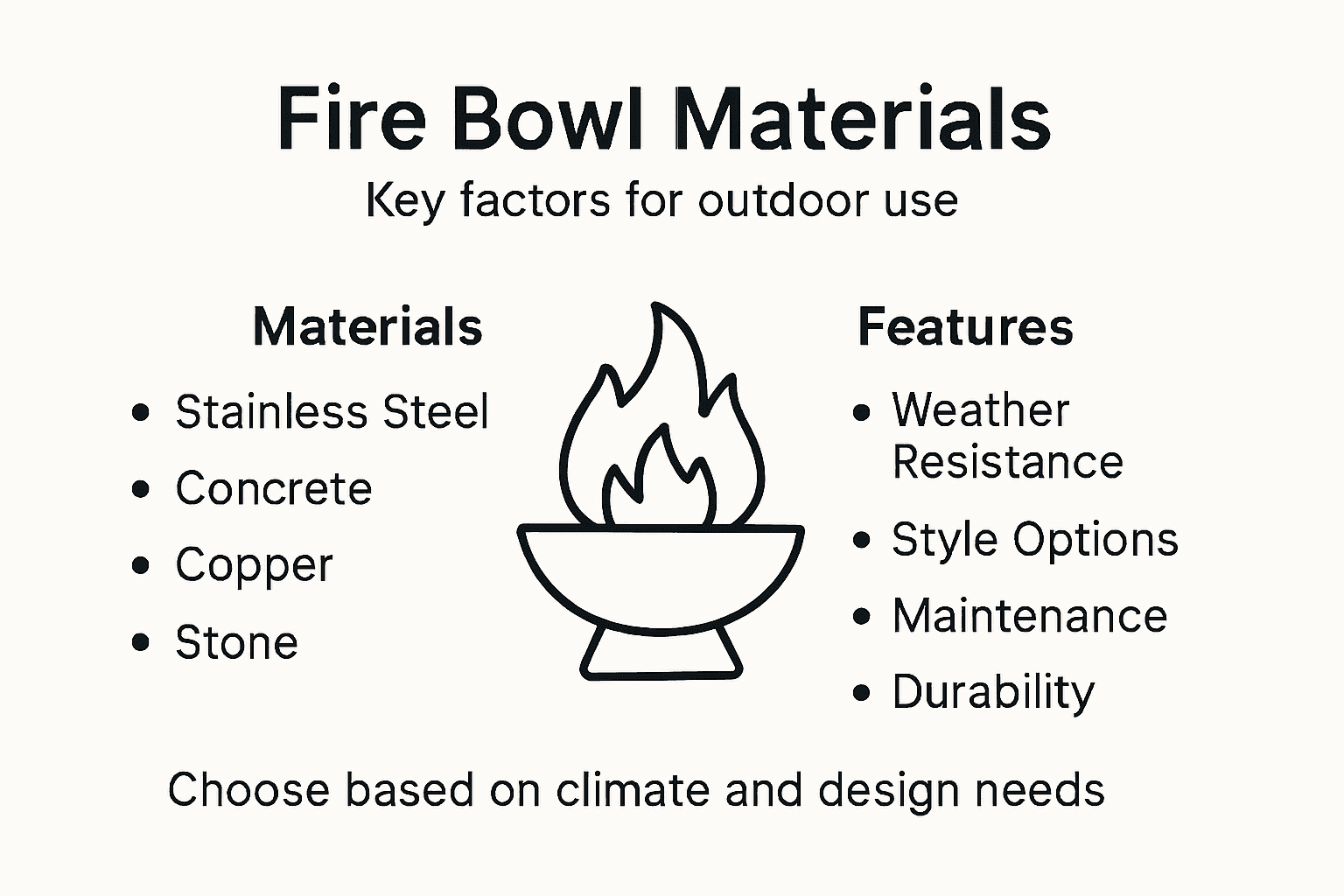
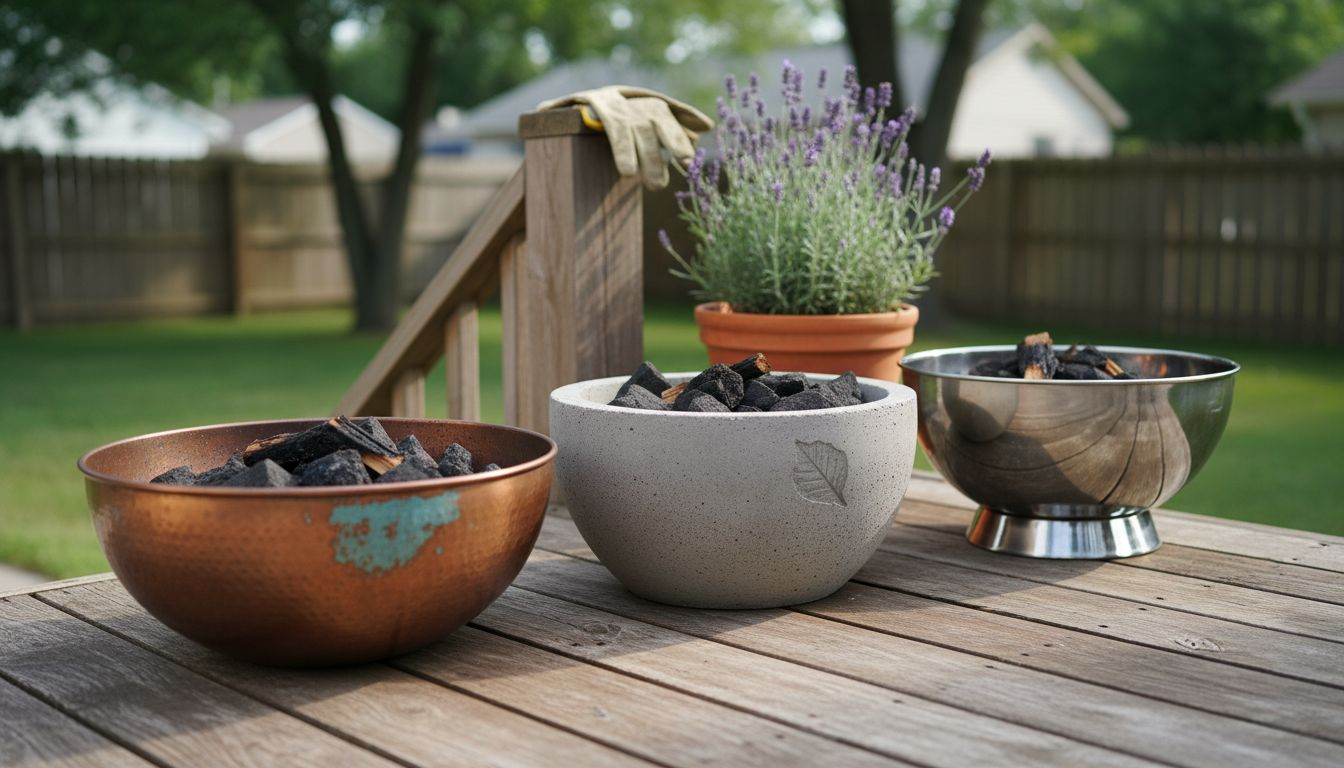
- Stainless Steel: Sleek, modern appearance with excellent rust resistance
- Copper: Develops rich patina over time, offering unique aging characteristics
- Concrete: Heavy, customizable design with contemporary architectural aesthetic
- Natural Stone: Organic texture that blends seamlessly with landscape elements
Each material brings distinct advantages to outdoor design. Fire bowl configurations range from traditional to contemporary styles, accommodating various architectural preferences and functional requirements. Stainless steel provides a clean, industrial look with maximum durability, while copper offers a warm, evolving appearance that develops character through natural oxidation.
Design variations further enhance fire bowl functionality, allowing homeowners to select from multiple fuel and operational configurations:
- Wood-burning models for rustic, traditional experiences
- Propane units offering precise flame management
- Natural gas configurations providing convenient, clean-burning performance
- Portable designs enabling flexible outdoor arrangement
Selecting the right material is about balancing aesthetic preferences with practical performance requirements.
Pro tip: Consider your local climate, maintenance capabilities, and design aesthetic when selecting a fire bowl material to ensure long-term satisfaction and performance.
Here’s a quick reference comparing fire bowl materials and their suitability for different climates and maintenance levels:
| Material | Climate Suitability | Maintenance Needs | Visual Style |
|---|---|---|---|
| Stainless Steel | All seasons, humid areas | Minimal; easy to clean | Modern, industrial |
| Copper | Mild, less humid | Moderate; patina forms | Elegant, rustic |
| Concrete | Varies, dry climates | Low; occasional cleaning | Contemporary, solid |
| Natural Stone | All climates, cold areas | Moderate; resealing needed | Natural, organic |
How Patio Fire Bowls Enhance Outdoor Living
Transforming ordinary backyards into extraordinary gathering spaces, patio fire bowls represent more than just a decorative element. They are sophisticated outdoor design features that dramatically extend the usability and aesthetic appeal of residential exterior environments, creating inviting atmospheres that encourage social connection and relaxation.
The key benefits of incorporating fire bowls into outdoor living spaces include:
- Extended seasonal usability of patios and decks
- Creation of warm, intimate gathering zones
- Enhanced visual interest and architectural sophistication
- Versatile heating solutions for various outdoor settings
- Promotion of social interaction and shared experiences
Ambiance transformation occurs through strategic placement and design. Modern fire bowls offer diverse configurations that support multiple entertainment scenarios, from quiet evening retreats to vibrant weekend gatherings. The gentle warmth and mesmerizing flame patterns create psychological comfort, drawing people together and extending outdoor enjoyment well beyond summer months.
Outdoor living experiences are dramatically enhanced through fire bowl integration:
- Intimate dinner parties with ambient lighting
- Weekend family gatherings with integrated warmth
- Solo relaxation moments with contemplative fire views
- Seasonal entertainment spaces that transcend traditional limitations
Fire bowls are not just outdoor accessories - they are architectural storytellers that transform exterior spaces into living experiences.
Pro tip: Position your fire bowl strategically to maximize wind protection and create natural conversation areas that invite social interaction.
Safety Guidelines and Legal Requirements Worldwide
Fire bowl safety demands comprehensive understanding of local regulations to ensure responsible and compliant outdoor heating. The complexity of safety guidelines varies significantly across different jurisdictions, requiring homeowners to navigate a nuanced landscape of legal requirements and best practices for outdoor fire features.
Critical safety considerations include:
- Maintaining minimum clearance distances from structures
- Installing fire bowls on non-flammable surfaces
- Using spark screens to control ember spread
- Verifying local fire code compliance
- Obtaining necessary permits from municipal authorities
Legal frameworks surrounding fire bowl usage differ dramatically worldwide. Regional fire codes establish specific guidelines that dictate placement, fuel type, and operational restrictions. Urban areas typically have more stringent regulations compared to rural regions, with some municipalities requiring professional installation certification for gas-powered units.
Safety protocols for responsible fire bowl operation involve:
- Conducting thorough site assessments before installation
- Checking wind conditions prior to lighting
- Maintaining fire extinguishing equipment nearby
- Prohibiting use during extreme dry or windy conditions
- Ensuring constant adult supervision
Safety is not an option - it is a fundamental requirement for responsible outdoor fire feature ownership.
Pro tip: Consult local fire department and homeowners association regulations before purchasing or installing a fire bowl to ensure full compliance and safety.
Comparing Fire Bowls to Fire Pits and Tables
Fire features represent diverse outdoor heating solutions, each with unique design characteristics and functional advantages. Luxury outdoor heating options transform residential spaces, offering homeowners sophisticated choices for creating inviting exterior environments that balance aesthetic appeal with practical warmth.
Distinctive characteristics of different outdoor fire features include:
- Fire Bowls: Elevated, sculptural designs with 360-degree flame exposure
- Fire Pits: Ground-level installations with traditional, rustic appearances
- Fire Tables: Multipurpose furniture pieces combining heating and social functionality
Structural and design differences significantly impact each feature’s performance and visual integration. Fire bowls distinguish themselves through their elevated, sculptural profiles that provide maximum flame visibility and architectural statement. Unlike traditional fire pits, they offer more design flexibility and can be crafted from various premium materials like stainless steel, copper, and concrete.
Key comparative elements between fire features involve:
- Installation complexity
- Heat distribution capabilities
- Aesthetic design potential
- Fuel type compatibility
- Maintenance requirements
Modern outdoor design celebrates versatility, with each fire feature telling a unique spatial narrative.
Pro tip: Consider your specific outdoor space dimensions, design aesthetic, and intended usage when selecting between fire bowls, pits, and tables to ensure optimal integration.
Here’s how fire bowls, fire pits, and fire tables compare for outdoor use:
| Feature | Fire Bowl | Fire Pit | Fire Table |
|---|---|---|---|
| Location Flexibility | Highly portable | Fixed placement | Usually stationary |
| Flame Visibility | 360-degree display | Partial visibility | Centralized viewing |
| Social Functionality | Focused gathering | Large group seating | Dining + heating |
| Material Options | Multiple premium types | Mostly stone/metal | Metal, stone, composite |
| Heat Distribution | Concentrated | Wide, general area | Balanced, moderate heat |
Elevate Your Outdoor Space with Premium Patio Fire Bowls from Backyard Pyre
Choosing the perfect patio fire bowl is essential to creating an inviting and stylish outdoor retreat. This article highlights key challenges such as selecting the right fuel type, understanding material durability, and ensuring safety compliance. If you want a fire feature that serves as both a functional heat source and a refined architectural centerpiece Backyard Pyre offers expertly curated collections designed to meet these exact needs. Discover sophisticated designs crafted from premium materials that blend seamlessly with modern patios while providing warmth and ambiance year-round.
Explore our wide range of luxury fire bowls and outdoor furnishings with Products - Luxury Outdoor Living | Backyard Pyre and delve into the refined patio selections available through Elementi Home - Patio - Luxury Outdoor Living | Backyard Pyre. Each piece reflects superior craftsmanship and white-glove service to transform your outdoor environment today. Don’t wait to turn your backyard into a stunning lifestyle destination visit Backyard Pyre now and step into elevated outdoor living experiences.
Frequently Asked Questions
What is a patio fire bowl?
A patio fire bowl is a sophisticated outdoor element designed to provide warmth, ambiance, and a striking focal point for outdoor gatherings. It features a shallow, wide basin for maximum flame visibility and is crafted from high-quality materials.
How does a patio fire bowl enhance outdoor living?
A patio fire bowl enhances outdoor living by creating inviting spaces that extend the usability of patios and decks. It transforms ordinary backyards into warm, engaging areas for socialization, relaxation, and entertainment throughout various seasons.
What materials are commonly used in patio fire bowls?
Common materials used in patio fire bowls include stainless steel, copper, concrete, and natural stone. Each material offers different aesthetic and functional benefits, such as rust resistance, contemporary design, and organic texture.
How do patio fire bowls compare to fire pits and fire tables?
Patio fire bowls differ from fire pits and fire tables in design and functionality. Fire bowls have elevated designs with 360-degree flame visibility, while fire pits are ground-level and often have a rustic look. Fire tables serve dual purposes as dining surfaces combined with heat sources, making them suitable for social settings.
Recommended
- Ultimate Luxury Outdoor Guide – Backyard Pyre
- Premium Fire Tables & Luxury Fire Pits | Elementi Dealer
- A Buyers Guide to Luxury Fire Features – Backyard Pyre
- Why choose us? Why choose us? choose us? – Backyard Pyre
- Patio Awning Ideas & Benefits - Transform Your Patio
- Covered Deck vs. Open Deck, Decide Which Is Right for You? | Buffalo Roofing & Exteriors | San Antonio to Corpus Christi, TX
- The Rise of Outdoor Living: How to Create a Garden That Works All Year Round - Wicked Gardens