

Table of Contents
- What Defines Modern Outdoor Fire Table Designs in 2026
- GFRC Fire Table Benefits: Why Material Matters for Longevity
- Outdoor Fire Table Sizing Guide: Matching BTU Output to Your Patio
- Choosing the Right Shape: Round, Square, Rectangular, or Linear
- Modern Patio Fire Pit Styling: Fire Glass, Lava Rock, and Surroundings
- Safety Features and Smart Home Integration to Prioritize
- Conclusion
- Frequently Asked Questions
Last Updated: September 21, 2026
What Defines Modern Outdoor Fire Table Designs in 2026
Modern outdoor fire table designs in 2026 are defined by clean geometric lines, weather-resistant materials like GFRC, and a shift toward fire features that double as functional furniture. We've watched buyers move past decorative novelty toward pieces built to last a decade or more.
GFRC Fire Table Benefits: Why Material Matters for Longevity
GFRC fire table benefits come down to one thing: it survives real weather. Glass fiber reinforced concrete (GFRC) is a mix of cement, sand, and alkali-resistant glass fibers that creates a lightweight shell far more resistant to cracking than poured concrete.
How GFRC Handles Sun, Humidity, and Freeze-Thaw Cycles
The glass fibers act as internal reinforcement, so the material flexes slightly instead of cracking when temperatures swing. In humid coastal climates, a properly sealed GFRC surface resists the moisture absorption that causes traditional concrete to spall and flake.
GFRC vs. Traditional Concrete and Cast Stone
Here's the practical comparison most listings skip:
| Material | Weight | Weather Resistance | Best For |
|---|---|---|---|
| GFRC | Light | High, handles freeze-thaw | Coastal, humid, cold climates |
| Traditional concrete | Heavy | Moderate, prone to cracking | Dry, mild climates |
| Cast stone | Very heavy | Moderate, can spall | Permanent, sheltered placements |
Outdoor Fire Table Sizing Guide: Matching BTU Output to Your Patio
The outdoor fire table sizing guide most buyers never get is this: match BTU output to the space you're actually heating, not the biggest number on the spec sheet. A fire table that's too small feels decorative; one that's oversized burns through fuel and overwhelms a small patio. The math behind heat coverage is where most buying guides stop short, so let's walk through it.
Calculating BTUs for Your Square Footage
As a working rule, plan on roughly 30 to 40 BTUs per square foot of patio area you want to warm. A 200-square-foot conversation area lands in the 6,000 to 8,000 BTU range. Larger gathering spaces push toward 10,000 BTUs and up.
A few practical anchors:
- Small balcony or courtyard: 40,000 BTU and under
- Standard patio conversation area: 40,000 to 60,000 BTU
- Large deck or poolside lounge: 60,000 BTU and above
Rated BTU vs. Delivered BTU: The Number That Actually Matters
Here's the mechanism most spec sheets hide. The BTU figure on the box is the burner's rated input, how much fuel it consumes at full open. What reaches your guests is delivered heat, and it's always lower. A few factors shave it down:
- Burner efficiency: Open-flame burners lose a meaningful share of heat straight up. A burner rated at 60,000 BTU may deliver a fraction of that to knee height where people actually sit.
- Wind: Even a light breeze pulls flame and heat sideways. A wind guard isn't cosmetic, it's a heat-retention device.
- Mounting height: A burner set deep below the table surface radiates more heat outward to the seating ring; one sitting flush throws more heat vertically.
- Ceiling and overhang: A covered patio traps rising heat and reflects it back down, so you can often size smaller under a roof than in open air.
Matching Burner Shape to Seating Layout
Sizing also depends on burner type. A linear burner spreads flame across a long, narrow footprint, which suits rectangular tables and long seating arrangements. A round burner concentrates heat in the center, better for circular conversation areas. If your seating is an L-shaped sectional, a linear or rectangular burner puts heat where the bodies are instead of dumping it into empty space on one side.
Choosing the Right Shape: Round, Square, Rectangular, or Linear
Shape decides how people gather around your fire table, so choose it before you fall in love with a finish. Round tables encourage face-to-face conversation and work well in compact, symmetrical spaces. Square tables offer a similar social dynamic with a more structured, contemporary look.
- Round: Best for compact spaces and circular seating
- Square: Structured look, good for symmetrical layouts
- Rectangular: Pairs with sectionals and long patios
- Linear: Widest heat distribution for large gatherings
Modern Patio Fire Pit Styling: Fire Glass, Lava Rock, and Surroundings
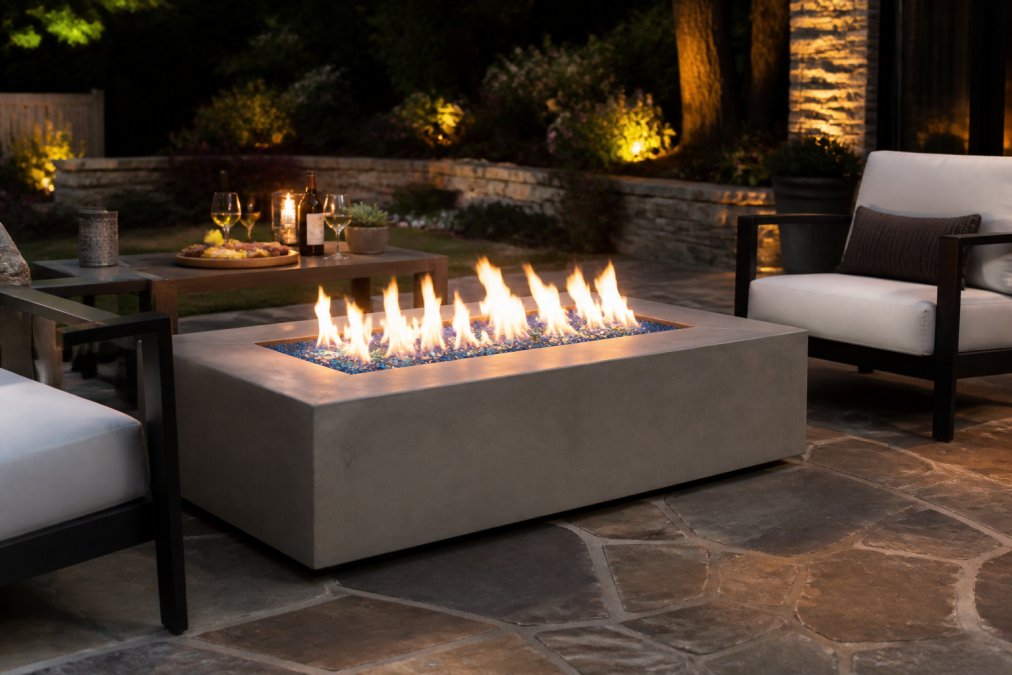
Modern patio fire pit styling starts with what goes inside the burner. Fire glass reflects flame and adds a jewel-like shimmer, while lava rock absorbs and radiates heat for a more natural, textured look. Both are decorative media, not fuel, and both sit above the burner to diffuse the flame.
Fuel Types and Eco-Friendly Alternatives
Propane remains the most common choice for its portability and easy propane tank concealment inside the table base. Natural gas conversion offers a permanent, never-refill option if you have a gas line run to the patio. For buyers weighing sustainability, propane and natural gas both burn cleaner than wood.
Safety Features and Smart Home Integration to Prioritize
Safety features separate a fire table you trust from one you watch nervously. The good news is that the mechanisms are well understood, the trick is knowing which ones matter and how they interact with connected controls and local code.
How the Core Safety Mechanisms Actually Work
- Thermocouple shut-off: A thermocouple is a small probe sitting in the flame path. As long as it senses heat, it holds the gas valve open. If the flame goes out, wind, fuel runout, a spill, the probe cools within seconds and the valve closes, stopping gas flow. This is the single most important safety component on any gas fire table.
- Flame control valve: Lets you modulate from a low, decorative flame to full output. Useful for fuel economy and for keeping flames modest near seating.
- Oxygen depletion sensor (ODS): Common on indoor-rated appliances, less so on outdoor tables, but worth asking about if you use the table under a partially enclosed structure.
- Auto shut-off timers: Some electronic ignition systems include a built-in timer that cuts gas after a set interval, a meaningful feature if you tend to leave the table running.
Certifications: What They Cover and What They Don't
Look for CSA certification on the ignition and gas components. CSA marks indicate the appliance has been tested to a recognized gas-appliance standard for construction, performance, and safety. What CSA does not cover is your installation: clearances to walls, ceilings, and combustibles, plus the gas line itself, fall to local code and the installer. A certified table installed too close to a wood pergola is still a hazard.
Smart Home Integration: What's Real Today
Smart home integration is the newer frontier, and it's worth separating marketing from function. What's actually shipping on modern tables:
- Remote ignition: A handheld remote or wall switch that lights the burner without bending to a manual valve. Simple, reliable, and the most common smart feature.
- App and voice control: Some units pair with phone apps or voice assistants to adjust flame height, set timers, or schedule shut-off. Verify the table uses a low-voltage control module, you don't want line voltage running to an outdoor appliance near water.
- Integrated lighting and heating zones: A few premium designs tie the fire table into a broader patio control system alongside string lights and patio heaters.
The Code and DIY Question Most Guides Skip
If you're running a natural gas line to the table, that work is typically permitted and inspected, and in most jurisdictions must be done by a licensed professional. Propane tables using a standard tank avoid the gas-line permit, but placement clearances still apply. Before any custom build or permanent install, check with your local building department on clearance-to-combustible requirements and whether a permit is required.
A few things to verify on any table:
- Thermocouple safety shut-off on the burner
- Wind guard included or available
- CSA certification for the ignition and gas components
- A manufacturer warranty that covers the finish, not just the burner
Conclusion
Choosing a fire table that still looks sculptural after five winters comes down to material, sizing, and safety, not the lowest sticker price. Backyard Pyre offers a curated selection of luxury GFRC fire tables and concrete fire bowls from Elementi and Modeno, backed by over 12 years of hands-on outdoor living experience and manufacturer warranties. Our team helps you match BTU output, shape, and finish to your actual patio, so you buy once and buy right.
Frequently Asked Questions
What are the latest trends in modern outdoor fire table designs?
Current trends favor linear and geometric shapes, GFRC construction for weather resistance, and integrated smart controls for flame height and ignition. Designers are also specifying fire glass over lava rock for a cleaner look, and choosing neutral concrete finishes that complement hardscaping rather than contrast with it.
How do I choose the right size fire table for my patio?
Measure your patio's usable area and leave at least 3 feet of clearance on all sides for seating and safety. For a standard 12x12-foot patio, a 36- to 48-inch round or square table works well. Larger spaces can accommodate linear burners up to 60 inches or more. Also check BTU output.
Are GFRC fire tables better than traditional concrete?
GFRC (glass fiber reinforced concrete) weighs significantly less than traditional concrete while offering comparable strength and better resistance to cracking from freeze-thaw cycles. It also allows for thinner, more sculptural profiles. For humid or coastal climates, GFRC's lower permeability helps prevent moisture damage over time.
What safety features should I look for in a gas fire table?
Prioritize a thermocouple safety shut-off, which cuts gas flow if the flame goes out, and a wind guard to keep flames stable. Look for an ignition system rated for outdoor use and confirm the unit is certified to U.S. safety standards. Always check local building codes for setback requirements before installation.