

Table of Contents
- How Long Does a Propane Tank Last on a Fire Pit
- Propane Fire Pit BTU Consumption and Fuel Efficiency
- Factors That Affect Propane Consumption
- Tips for Extending Propane Tank Life
- Propane Fire Pit Safety Clearance and Tank Placement
- Choosing the Right Fire Pit for Your Propane Needs
- Frequently Asked Questions
Last Updated: October 2, 2026
How Long Does a Propane Tank Last on a Fire Pit
A propane tank fire pit with a 20-pound tank typically lasts between 4 to 8 hours, depending on the BTU output and whether you're running on high or low heat. But that's the quick answer.
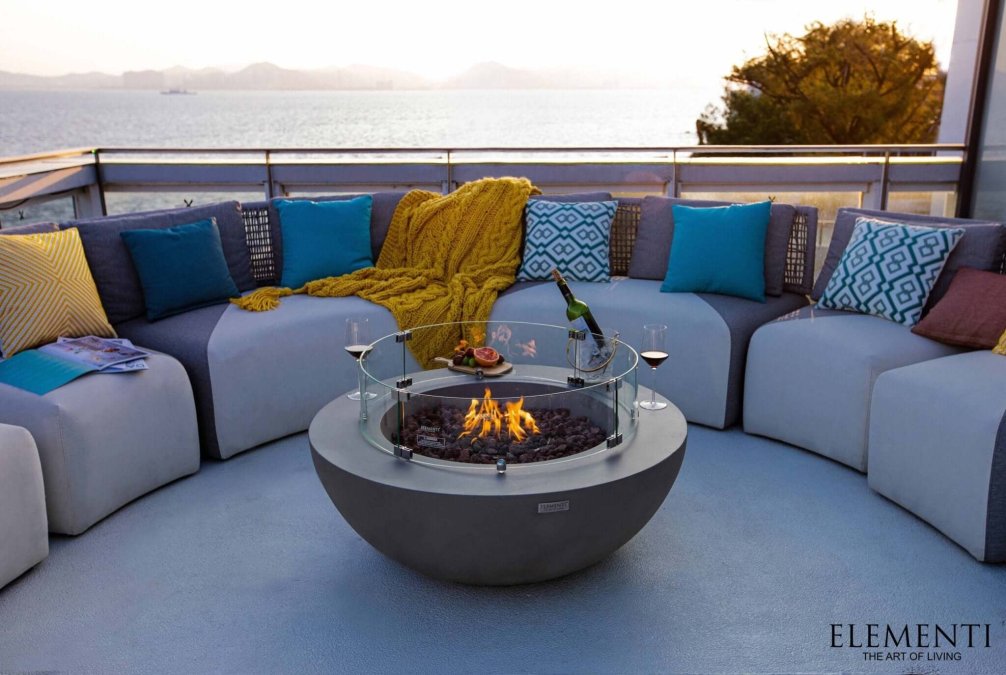
The answer depends on several interconnected factors: the burner's BTU rating, your flame height preference, ambient temperature, and how well your fire pit is maintained.
The Math Behind Burn Time
Calculating how long your propane tank lasts comes down to one simple formula: Tank Capacity ÷ Hourly Consumption = Burn Hours.
A standard 20-pound propane cylinder contains approximately 4.7 gallons of usable propane and produces roughly 91,500 BTU per gallon when burned completely.
Here's where it gets practical. A fire pit running at 50,000 BTU per hour will consume about 0.55 gallons per hour.
Real-World Estimates for Standard Tank Sizes
The most common propane tank for fire pits is the 20-pound cylinder. Here's what you can realistically expect:
20-Pound Tank Burn Times by BTU Output:
| BTU Rating | High Setting (Hours) | Low Setting (Hours) | Typical Use Case |
|---|---|---|---|
| 40,000 BTU | 10-12 | 18-20 | Smaller fire bowls, intimate gatherings |
| 50,000 BTU | 8-10 | 14-16 | Standard fire tables, 4-6 person seating |
| 100,000 BTU | 4-5 | 8-10 | Large fire tables, extended warmth radius |
| 150,000 BTU | 3-4 | 6-7 | Premium fire tables, windy conditions |
The Ravello 72" Fire Pit from Elementi Pro delivers 150,000 BTU of output, allowing the flame to remain stable in wind up to 31 miles per hour. On high heat, expect 3-4 hours per 20-pound tank; on low, 6-7 hours.

The Rose Bowl 48" Fire Pit runs at 100,000 BTU, giving you 4-5 hours on high and 8-10 hours on low with a single 20-pound tank.
Propane Fire Pit BTU Consumption and Fuel Efficiency
BTU output and propane consumption are directly proportional: more heat equals faster fuel burn, but also more warmth and a more dramatic flame.
High Setting vs. Low Setting Efficiency
Running your fire pit on low setting is the single most effective way to extend propane tank life. The difference is substantial.

At high heat, all burner orifices are open and gas flows at maximum pressure, producing full flame height and wider heat radiation, at the cost of faster propane consumption.
On low heat, the regulator restricts flow, reducing BTU output by roughly 40-50% and propane consumption proportionally.
A 100,000 BTU fire pit running on high consumes roughly 1.1 gallons per hour; on low, around 0.6 gallons per hour, a 50% reduction for an often-adequate flame.
Why BTU Output Matters for Tank Life
A higher-BTU fire pit doesn't necessarily consume propane faster in practice.
The Elementi Pro line is engineered for challenging conditions: wind, cool temperatures, and large gathering spaces demand higher BTU output to maintain a usable flame.
A modest 40,000 BTU fire pit in a protected patio delivers excellent results on high heat and runs 12+ hours on a single tank.
Factors That Affect Propane Consumption
Burn time estimates assume ideal conditions. Real outdoor environments are never ideal. Several factors compress or expand your actual propane tank life.
Ambient Temperature and Weather Impact
Cold air reduces propane vaporization efficiency.
Wind can flatten the flame, making it appear weak even at full capacity, prompting you to increase heat and fuel burn.
Salt spray and moisture corrode regulators and hose connections, creating leaks that force the burner to work harder and consume more propane.
A fire pit in a northern climate during October consumes propane 15-20% faster than in July at identical BTU settings.
Flame Height, Burner Design, and Regulator Settings
Burner design, linear tube, H-style header, or ring burner, affects how efficiently propane converts to flame.
Elementi Pro's Twice Flame burner uses CNC-machined brass nozzles for taller, fuller flames with less fuel waste.
A quality two-stage regulator maintains consistent pressure as the tank empties; a single-stage regulator causes pressure fluctuations and unpredictable consumption.
Weak or inconsistent flame often indicates a failing regulator, not a weak tank.
Ravello 72" Fire Pit | 150K BTU Brass Burner | Elementi Pro →
Tips for Extending Propane Tank Life
You can't eliminate propane consumption in a propane tank fire pit, but you can manage it strategically. These practices will stretch your tank's life and improve your overall experience.
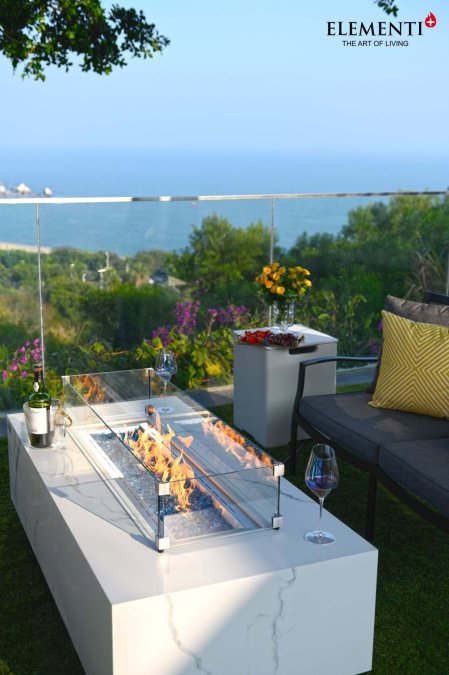
Operating Practices That Maximize Fuel Efficiency
Match flame height to your use. A moderate flame is often more practical for extended entertaining than a towering one.
Close the valve completely when not in use. Even a slightly open valve allows propane to escape slowly.
Keep the regulator clean. Rinse gently with fresh water and dry completely to maintain consistent pressure and prevent leaks.
Position the tank in shade. Direct sunlight increases vapor pressure and causes the safety valve to vent excess gas.
Maintenance and Tank Care
Propane tanks are built to last decades, but they require basic maintenance to perform reliably.
Inspect the hose connection annually. Look for cracks, corrosion, or discoloration in the hose.
Check the regulator for leaks. Apply a soapy water solution to the regulator's connection points. Bubbles indicate escaping gas.
Store tanks upright. Propane tanks are designed to be stored in a vertical position.
Propane Fire Pit Safety Clearance and Tank Placement
Proper tank placement affects both safety and propane efficiency. A tank positioned too close to the flame or in direct sunlight will experience pressure fluctuations that degrade performance.
Distance Requirements and Proper Hose Connection
Most fire pit manufacturers recommend keeping the propane tank at least 10 feet away from the fire pit itself.
If your patio layout doesn't allow 10 feet of separation, use a longer hose (typically available in 10-foot and 20-foot lengths) to position the tank further away.
The hose connection should be hand-tight plus one-quarter turn with a wrench. Over-tightening can crack the fitting and cause leaks. Under-tightening allows gas to escape.
Ventilation and Weather Protection
A propane tank should never be stored in an enclosed space where leaking gas could accumulate. An outdoor location with natural air circulation is ideal.
Rain and snow are not threats to a properly functioning propane tank, the metal is designed to withstand weather exposure.
Never cover a propane tank with a tarp or enclosed box. The tank needs to breathe, and trapped moisture accelerates corrosion.
Choosing the Right Fire Pit for Your Propane Needs
The "right" fire pit isn't the one that burns the longest on a single tank.
If you host large gatherings in an open yard, a high-BTU fire pit like the Ravello 72" (150,000 BTU) is worth the propane consumption.
At Backyard Pyre, we help you match fire pit size and BTU output to your actual space and entertaining frequency.
The Modeno 40,000 BTU Natural Gas Conversion Kit also offers a path forward if you're considering a permanent installation. Converting from propane to natural gas eliminates the need to refill tanks and provides unlimited burn time for entertaining. The conversion is straightforward and preserves the fire pit's warranty.

Choosing between propane tank sizes and BTU outputs feels complicated until you understand the relationship between heat output, fuel consumption, and real-world conditions.
Frequently Asked Questions
How long will a 20lb propane tank last on a fire pit?
A standard 20-pound propane cylinder typically lasts 4 to 8 hours on a fire pit, depending on BTU output and flame setting. A 50,000 BTU fire table on high setting burns through a 20lb tank in roughly 4 to 5 hours. On low setting, expect 8 to 10 hours or more. Higher-output models like the Ravello 72" at 150,000 BTU will consume a 20lb tank much faster, roughly 1.5 to 2 hours on high setting. Always check your specific fire pit's BTU rating and fuel consumption specifications.
Does the BTU output of my fire table change how fast it consumes propane?
Yes, directly. BTU (British Thermal Units) measures heat output per hour. A fire pit with 150,000 BTU consumes propane three times faster than a 50,000 BTU model at the same setting. Higher BTU means more gas flowing through the burner, which produces taller flames and greater warmth but depletes your tank sooner. Low-setting operation reduces BTU output and extends tank life significantly, a high-powered fire pit on low setting may run twice as long as on high.
What are the common factors that affect propane burn rates?
Propane consumption depends on several factors: BTU output of your burner, flame height setting (high vs. low), ambient temperature (cold weather increases consumption because the fire works harder to maintain heat), wind exposure (wind cools the flame and forces the burner to work harder), regulator pressure settings, and burner design efficiency. GFRC fire tables with quality brass burners and precision nozzles, like Elementi Pro models, burn more efficiently than poorly designed burners, meaning you get more usable heat per gallon of propane.
How should I monitor propane levels during use?
Check your propane tank weight before and after use. A full 20-pound cylinder weighs about 36 pounds total (including the empty tank). Subtract the 16-pound tare weight to find remaining propane. Many propane refill stations have scales. Alternatively, pour warm water down the outside of the tank, propane inside stays cold, so you'll feel a distinct temperature difference where the liquid propane ends. For regular entertainment, keep a backup 20lb cylinder on hand so you never run out mid-gathering.