

Choosing the right patio size can define the entire mood of your luxury outdoor space. For affluent homeowners across North America, balancing sophisticated design with practical comfort is the first step toward creating a truly inviting gathering area. With proper sizing ensuring both guest comfort and essential safety clearances, you will discover how to transform your fire pit setting into an elegant and functional sanctuary where every detail enhances relaxation and style.
Table of Contents
- Defining Patio Size For Outdoor Fire Pits
- Key Fire Pit Types And Sizing Needs
- Essential Safety Clearances And Regulations
- Design Impacts: Seating, Flow, And Aesthetics
- Common Sizing Mistakes To Avoid
Key Takeaways
| Point | Details |
|---|---|
| Patio Sizing is Essential | Proper patio measurements ensure comfort, safety, and a luxurious outdoor experience for guests. |
| Safety Regulations Matter | Maintaining adequate clearances and adhering to local fire codes protects your property and enhances safety. |
| Selecting the Right Fire Pit Type | Different fire pit designs dictate specific space requirements, influencing the overall layout and ambiance of your patio. |
| Design Flow and Aesthetics | Thoughtful arrangement of seating and pathways fosters natural movement and enhances the visual harmony of the outdoor space. |
Defining Patio Size for Outdoor Fire Pits
Your patio size determines everything about your fire pit experience, from how many guests can gather comfortably to whether your setup meets safety standards. Getting this right separates a functional outdoor space from a truly luxurious retreat.
The foundation of proper sizing starts with understanding the relationship between your fire pit and the surrounding space. A well-proportioned patio accommodates both the fire feature and comfortable movement around it, creating an inviting atmosphere where guests naturally want to linger.
Understanding the Comfort Zone
Comfort begins with adequate space for furniture and circulation. Most luxury patios incorporate a dining or seating area alongside the fire pit, requiring thoughtful spatial planning.
- 12-14 feet minimum for a patio with a 48-inch round table plus fire pit
- Additional 2-3 feet on each side for comfortable chair movement
- Open pathways connecting your patio to other outdoor areas
- Buffer zones between seating and the fire feature itself
This sizing allows guests to pull chairs back without feeling crowded while maintaining conversation distances that make gathering enjoyable.
Safety and Setback Requirements
Safety regulations aren’t suggestions—they’re essential for protecting your property and guests. The specific distances you maintain directly impact both legal compliance and practical functionality.
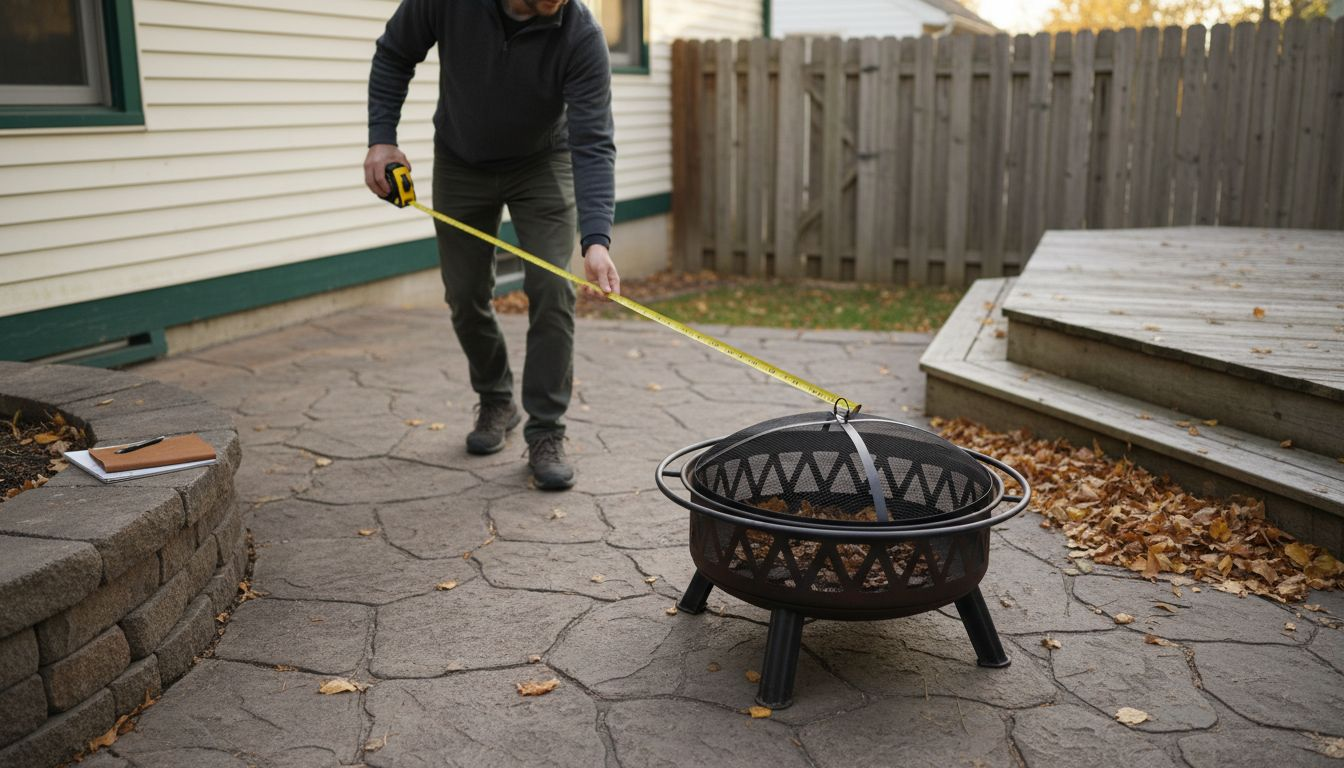
Wood-burning fire pits require at least ten feet clearance from structures like your home, deck, or garden buildings. This distance prevents embers and heat from damaging nearby elements. Beyond your immediate patio, establishing a home ignition zone with 30-foot clearance addresses vegetation and combustible materials around your property.
Think of these zones as invisible rings protecting your investment and creating a professionally designed outdoor sanctuary.
Sizing for Your Specific Setup
The type of fire feature you choose influences patio dimensions. Designer fire pits, tabletop models, and traditional fire bowls each create different spatial requirements and aesthetic impacts.
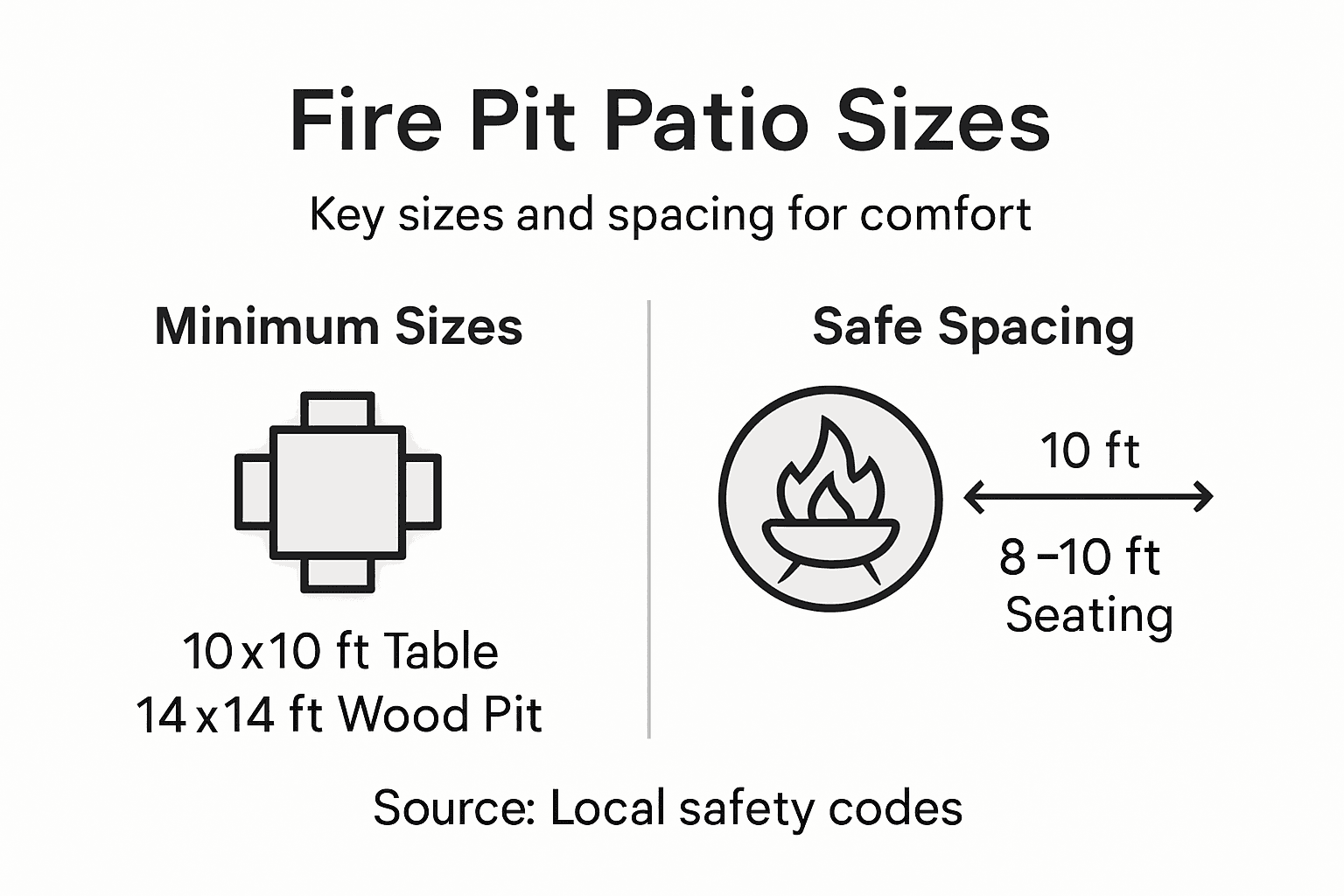
- Compact fire tables: Work in patios as small as 10x10 feet
- Medium fire pits: Require 12x12 feet minimum for comfortable seating
- Large statement pieces: Benefit from 14x16 feet or larger for luxurious spacing
- Built-in fire features: Demand permanent infrastructure planning and precise placement
A patio fire bowl creates an entirely different experience than a traditional pit, influencing both dimensions and aesthetic integration with your outdoor design.
Integration With Overall Landscape
Your patio doesn’t exist in isolation—it connects to pathways, neighboring spaces, and your home’s architecture. Premium outdoor living requires considering traffic flow from multiple directions.
Guests arriving from your home, accessing the garden, or moving toward additional outdoor areas should never feel blocked or cramped. Proper patio sizing creates natural circulation patterns that make your space feel generous and thoughtfully planned.
Luxury Considerations for Scale
Affluent homeowners typically prefer generous spacing over minimal compliance. A 16x18 foot patio feels noticeably more sophisticated than the bare minimum, allowing for premium furnishings, layered seating arrangements, and that coveted sense of spaciousness.
This investment in scale distinguishes luxury outdoor living from standard residential setups. Your guests will feel the difference in comfort and elegance immediately.
Proper patio sizing creates the emotional experience of luxury—space to breathe, room to gather, and the confidence that everything is safely planned.
Pro tip: Measure your current outdoor space, mark a 10x10 foot square with chalk or rope, and arrange your preferred furniture within it to visualize real comfort levels before finalizing your patio dimensions.
Key Fire Pit Types and Sizing Needs
Different fire pit types demand different spatial footprints. Understanding what each design requires helps you select the perfect feature for your patio dimensions and lifestyle preferences.
Your choice of fire pit style directly influences how much space you’ll need and how your guests will experience the gathering. Each type offers distinct advantages, from compact elegance to bold statement-making.
Wood-Burning Fire Pits
Traditional wood-burning pits remain the quintessential choice for luxury outdoor spaces, offering authentic ambiance and that unmistakable crackling warmth. These contain fire safely within metal, stone, or brick structures while creating a focal point that draws people together.
Wood-burning models typically require larger patios due to smoke dispersal and safety considerations. Plan for these key factors:
- Minimum 14x14 foot patio for comfortable wood-burning setup
- Elevated clearance for smoke to rise and dissipate naturally
- Ash management space around the perimeter
- Premium seating placement at comfortable distances from heat and smoke
The rustic charm and authentic fire experience appeal strongly to affluent homeowners who value tradition alongside modern comfort.
Gas and Propane Fire Features
Gas fire pits offer precision, cleaner operation, and consistent ambiance without the smoke concerns of wood burning. These modern alternatives deliver the luxury fire experience with enhanced control and lower maintenance demands.
Natural gas or propane-fueled fire pits provide flexibility in sizing since they don’t require the same clearance distances as wood-burning models. You gain more design freedom while maintaining sophisticated aesthetics.
Consider these advantages for space planning:
- Compact sizing options starting at 10x10 feet
- No smoke impact on adjacent spaces or structures
- Adjustable flame intensity for ambiance control
- Cleaner burning with reduced particulate emissions
- Year-round usability without seasonal smoke concerns
Gas options work beautifully in smaller patios while delivering the luxury experience discerning homeowners expect.
Tabletop and Sculptural Designs
Designer fire tables and sculptural pieces function as furniture and art simultaneously. Various fire pit types exist for different luxury outdoor spaces, each with unique spatial requirements and aesthetic impact.
These conversation-piece designs transform patios into curated galleries:
- Fire bowls: 8-10 foot clearance minimum, intimate gathering focus
- Fire tables: Dining integration, 12-foot minimum for comfort
- Linear fire features: Modern aesthetic, flexible patio dimensions
- Built-in constructions: Custom sizing based on your specific layout
Tabletop models let you add fire features to already-established patios without major renovation.
Matching Type to Your Patio Size
Smaller patios thrive with gas fire tables or compact sculptural bowls. Larger estates accommodate dramatic wood-burning installations or multiple fire features creating zones throughout the landscape.
Your fire pit type should enhance your patio’s existing character while respecting safety requirements and traffic patterns.
Pro tip: Visit luxury outdoor showrooms to experience different fire pit types firsthand, observing how each creates distinct atmospheres and considering which aligns with your patio dimensions and entertaining style.
Here is a comparison of fire pit types and their optimal patio space needs:
| Fire Pit Type | Minimum Patio Size | Key Advantage | Ideal For |
|---|---|---|---|
| Wood-Burning | 14x14 feet | Authentic ambiance | Large gatherings & tradition |
| Gas/Propane | 10x10 feet | Flexible placement | Smaller patios, easy upkeep |
| Tabletop/Sculptural | Varies, as small as 8x8 | Artful focal point | Compact or modern layouts |
| Built-In | Custom, often 14x16+ | Integrated design | Luxury, permanent solutions |
Essential Safety Clearances and Regulations
Safety clearances aren’t bureaucratic hurdles—they’re the foundation of responsible luxury outdoor living. Understanding and implementing these standards protects your property, your guests, and your peace of mind.
Fire pit regulations exist because fire spreads unpredictably. The distances and specifications outlined in local codes are based on real-world fire behavior and property damage prevention.
Understanding Minimum Distance Requirements
Distance matters more than you might think. Fire pits require minimum distances of 10 to 25 feet from structures and combustible objects, depending on your location and local fire codes.
These clearances protect multiple aspects of your property:
- 10 feet minimum from your home, deck, and permanent structures
- 10-15 feet from overhanging tree branches and vegetation
- Clear sightline around the fire pit for supervision and safety
- Buffer zones between the fire pit and any flammable materials
Affluent homeowners often work with landscape architects to integrate these clearances into sophisticated designs that feel spacious rather than restrictive.
Use this table as a quick guide to typical safety and comfort clearances:
| Situation | Recommended Clearance | Purpose |
|---|---|---|
| From home/structure | At least 10 feet | Prevent property damage |
| From overhanging branches | 10-15 feet | Improve safety and airflow |
| Seating to fire pit | 8-10 feet | Ensure guest comfort |
| Edge of patio to fire feature | 3-4 feet | Allow for safe movement |
Surface and Placement Standards
What sits beneath your fire pit matters as much as what surrounds it. Fire pits must be placed on non-flammable surfaces like concrete, bricks, or metal grates that prevent ground fires.
Proper surface placement prevents:
- Grass fires from radiant heat reaching dry vegetation
- Structural damage to decking or patio materials beneath the fire pit
- Moisture damage from fire pit sitting directly on soil
- Ash spread across multiple surface types
Quality fire tables and designer pits come with integrated bases engineered for safe placement on various surfaces.
Local Regulations and Permits
Every municipality has different fire pit rules. What’s legal in one neighborhood might violate codes in another, making local research essential before installation.
Fire pit regulations vary by locality and commonly include restrictions on pit size, usually limiting open flames to within three feet in diameter and two to three feet in height. Many areas require permits before installation, and some impose seasonal burn bans during high fire-risk periods.
Steps to verify compliance:
- Contact your local fire department for specific clearance requirements
- Check municipal codes for size and design restrictions
- Obtain required permits before purchasing or installing
- Verify HOA regulations if you live in a planned community
- Confirm liability insurance covers your specific fire pit type
Active Supervision and Maintenance
Essential safety guidelines recommend supervision during use, with immediate extinguishment when needed to prevent fire spread and smoke nuisance. Your patio design should accommodate easy access to extinguishment equipment and clear sightlines around the entire fire pit.
Maintain your space by:
- Clearing debris from the surrounding area regularly
- Keeping extinguishers handy and easily accessible
- Monitoring wind conditions before igniting fires
- Ensuring adequate seating distance for guest comfort and safety
Compliance transforms from a checklist into an expression of respect for your property and neighborhood—luxury living built on responsibility.
Pro tip: Schedule a consultation with your local fire marshal before finalizing patio plans; their insights often reveal solutions that enhance both safety and design while meeting all regulatory requirements.
Design Impacts: Seating, Flow, and Aesthetics
Your patio layout determines whether your fire pit becomes the heart of your outdoor living or feels like an awkward afterthought. Strategic sizing creates conversation zones, traffic patterns, and visual harmony that elevate the entire space.
The relationship between fire pit placement, seating arrangements, and patio dimensions transforms functionality into luxury experience. Every measurement influences how your guests move through and experience your outdoor sanctuary.
The 360-Degree Seating Advantage
Fire pits offer a distinct advantage over directional features like fireplaces. Fire pits typically support 360-degree seating, accommodating more guests compared to fireplaces that focus heat in one direction, creating intimate gathering spaces where everyone feels equally included.
This circular arrangement encourages natural conversation and connection. Consider these spatial benefits:
- Equal sightlines for all guests regardless of seating position
- Flexible group sizes from intimate pairs to larger gatherings
- Natural focal point that organizes the entire patio layout
- Multiple entry points without blocking anyone’s view or comfort
A well-proportioned patio amplifies this advantage, allowing comfortable distances between the fire pit and seating.
Seating Comfort and Ergonomics
Comfortable seating transforms your fire pit from gathering spot to destination. Seating design principles balance comfort, ergonomics, and cultural context while encouraging social interaction and complementing your patio aesthetic.
Optimal spacing between seating and fire pit prevents discomfort:
- 8-10 feet minimum for comfortable heat distance from most fire features
- Varied seating heights accommodating different guest preferences and mobility needs
- Backrests and armrests providing support for extended relaxation
- Adjacent surfaces for beverages, blankets, and personal items
Luxury outdoor living accommodates the reality that guests gather for hours, not minutes.
Traffic Flow and Circulation Patterns
People need to move through your patio naturally. When seating and fire pit placement blocks pathways or creates awkward angles, guests feel uncomfortable even without consciously understanding why.
Flexibility and adaptability in seating layouts help maintain flow and accommodate different group sizes, enhancing both functionality and style. Smart patio sizing allows:
- Clear pathways from home to garden and around the fire pit
- Emergency access for safety and maintenance
- Rearrangeable furniture for different entertaining scenarios
- Edge zones where guests can stand without blocking seated guests’ views
A generously sized patio absorbs traffic flow without disrupting the gathering experience.
Aesthetic Integration and Visual Balance
Your fire pit shouldn’t dominate the visual landscape—it should anchor it. The material, scale, and positioning create either harmony or tension with surrounding architecture and landscaping.
Designer fire features work best when proportioned to their setting. The relationship between patio size and fire pit dimensions determines whether your outdoor space feels balanced or overwhelming. Gas-burning tables offer sleek minimalism, while wood-burning pits project dramatic presence.
Great patio design makes fire pit placement feel inevitable—the only logical place for the feature to exist.
Pro tip: Sketch your patio layout to scale, marking furniture positions and walking paths, then identify where guests naturally congregate to find the optimal fire pit location that enhances rather than disrupts these organic gathering zones.
Common Sizing Mistakes to Avoid
The difference between a perfectly planned patio and a regrettable installation often comes down to avoiding predictable errors. Learning from common mistakes saves time, money, and the frustration of redesigning an outdoor space that doesn’t work.
Most sizing problems stem from underestimating space needs or overlooking safety requirements. These oversights compromise both functionality and your investment in luxury outdoor living.
Underestimating Clearance Distances
The most dangerous mistake is placing your fire pit too close to structures and combustible materials. Common sizing mistakes include placing fire pits too close to structures or combustible materials and underestimating clearance needed around the fire to prevent sparks and heat damage.
Embers travel farther than you might expect. Not providing at least a 20-25 feet buffer zone or at minimum 10 feet can lead to accidental fires, so measuring twice before purchasing is essential.
Common distance errors:
- Too close to home resulting in siding damage or window cracks
- Beneath overhanging branches causing tree damage and safety hazards
- Near wooden decks risking catastrophic fire spread
- Inadequate buffer from neighbors creating liability and relationship problems
Insufficient Seating and Movement Space
Patios sized only for the fire pit itself feel cramped and uncomfortable. Your guests need room to sit, stand, and move without feeling trapped.
Inadequate space for seating or traffic flow around the fire pit transforms your fire feature from gathering place to obstacle. Plan for:
- Minimum 8-foot radius around the fire pit for comfortable seating
- Additional 3-4 feet for guests to pull chairs back without hitting others
- Clear pathways from your home and through the garden
- Adequate turning radius for furniture rearrangement
A patio that feels spacious invites lingering; a cramped one sends guests retreating indoors.
Problematic Surface Materials and Placement
Placement on wood decks or uneven ground that can cause instability creates both safety hazards and structural damage. Failing to use non-combustible materials for fire pit bases and surroundings increases fire risk dramatically.
Surface mistakes include:
- Wooden deck placement risking fire spread and board deterioration
- Gravel or mulch bases that catch sparks and ignite
- Uneven terrain causing tipping and compromised safety
- Moisture-prone locations creating rust and structural failure
Invest in proper concrete, pavers, or engineered fire pit pads from the start.
Ignoring Local Regulations
Every jurisdiction has different requirements. Skipping this research leads to costly removals or compliance modifications after installation.
Common sizing mistakes include ignoring local regulations that set diameter and height limits for fire pits. Contact your fire department and check local codes before finalizing patio dimensions.
The costliest mistake isn’t choosing the wrong fire pit size—it’s choosing without consulting local regulations that could require complete redesign.
Pro tip: Before purchasing any fire feature, visit your county assessor’s office or contact your local fire marshal with your patio dimensions and planned placement to receive written approval, preventing expensive installation errors and ensuring full compliance with all regulations.
Elevate Your Outdoor Living With Perfectly Sized Fire Features
Designing a patio that balances comfort, safety, and style is no small feat. This article highlights how patio size directly influences your fire pit experience—from maintaining safe clearances to creating elegant seating arrangements where guests feel welcome and relaxed. If you want to avoid common pitfalls like cramped layouts or ignoring safety codes, consider sourcing your fire features and furniture from a premium retailer that understands these challenges.
At Backyard Pyre, we specialize in luxurious fire pits and stylish outdoor furnishings designed to fit thoughtfully into a variety of patio sizes. Explore our carefully curated Elementi Plus collection for designer fire tables that combine sophistication with functional spacing. Pair these fire features with our Stylish Patio Furniture for Your Outdoor Space to create inviting seating zones that comply with essential clearance requirements.
Create a spacious and safe outdoor retreat that impresses guests and fulfills your vision of luxury living. Visit Backyard Pyre now to discover curated solutions that transform your patio into an elegant sanctuary where every detail is meticulously planned.
Frequently Asked Questions
What is the ideal patio size for a fire pit?
A patio should be at least 10x10 feet for compact fire tables and 14x14 feet for wood-burning fire pits to ensure comfortable seating and movement around the fire feature.
How much clearance is needed between a fire pit and nearby structures?
Generally, a fire pit should be placed at least 10 feet away from structures, such as homes and sheds, to prevent fire hazards and ensure safety.
What are the recommended seating distances from a fire pit for comfort?
For optimal comfort, seating should be placed 8-10 feet away from the fire pit to allow guests to enjoy warmth while preventing overheating or discomfort from smoke.
How do different fire pit types impact patio size requirements?
Fire pit types vary in size, with wood-burning pits needing larger patios (at least 14x14 feet), while gas fire tables can function well in smaller patios starting at 10x10 feet. This flexibility allows for more design options for different outdoor spaces.